
11 Best Things to Do in Bogotá, Colombia

The best things to do in Bogotá combine Monserrate’s city views, pre-Hispanic history at the Gold Museum, Botero’s art and a guided walk through La Candelaria. Add a market visit or cooking class for local food, and keep a separate day for the Salt Cathedral in Zipaquirá.
Choose the Bogotá experience worth booking ahead
A day outside the city: Beyond Colombia’s Zipaquirá group tour is useful if you want return transport arranged. Cathedral admission and meals cost extra on the checked listing; compare the total, not just the headline price.
Check Zipaquirá tour dates and exclusions
Stay in town: a street-art walk adds the stories behind the murals. A tip-based alternative is described in entry 9; you do not need to book both.
Compare the prepaid street-art tour
These are separate experiences, not a sightseeing pass. Museo Botero is free, and the central streets can be explored independently; pay for guiding or convenient transport when it adds value to your trip. Check the selected option’s language, meeting point and cancellation terms.
Bogotá is the heart of modern Colombia, with a restaurant and nightlife scene, a historic quarter and museums that reward more than a rushed stopover. I asked a group of bloggers about their favorite activities and places in Bogotá; their recommendations form this guide.
Bogotá at a glance
- Time: allow three full days for the city plus Zipaquirá, or four for a slower pace and cooking class.
- Priorities: one history or graffiti walk, one major museum and Monserrate when visibility is good.
- Geography: Zipaquirá and Chía are outside the city center; do not plan them as neighboring sights.
- Money: COP means Colombian pesos. Budget separately for guides, transport, admission and meals.
- Weekly closures: Gold Museum Monday; Botero and the Monserrate walking trail Tuesday.
Quick picks for your Bogotá visit
- City views: Monserrate
- Pre-Hispanic history: Gold Museum
- Free art museum: Museo Botero
- Art and social history: graffiti walk
- Hands-on food: market and cooking class
- Sunday outdoors: Ciclovía
- A full-day excursion: Zipaquirá
1. Monserrate Mountain
Recommended by Campbell & Alya from Stingy Nomads

One of our favorite activities in Bogotá is going up Monserrate mountain, where you can see the whole city like on the palm of your hand.
You can walk up or use the cable car or funicular, depending on which services are operating.
The walk is quite tough: a steep, long ascent high above the city.
We walked up twice, both times on weekends when many people were going up. We were never alone, and it felt quite safe during our visits.
The walking trail has its own opening schedule, separate from the mountain transport; check the current access rules below.
Don’t forget to take enough water with you for the walk; you’ll get thirsty.
If the walk sounds like too much of a mission, take a cable car or a funicular instead.
Both rides offer views of the area. You can combine walking one way with a ride back, provided the trail is open and the service you need is operating.
At the top, you can visit the Basílica del Señor Caído de Monserrate.
There are several cafés and souvenir shops around the church where you can have lunch or coffee with a view over Bogotá.
Campbell and Alya’s experience does not establish today’s safety conditions. Check IDRD trail guidance and local notices, and choose the transport option if a steep walk does not suit you.
Plan your visit
- Location: Eastern hills above central Bogotá.
- Best for and time: City views; allow 2–3 hours using transport, longer if hiking or queuing.
- Cost: Walking trail free. Standard transport return: COP 35,000 Monday–Saturday/holidays; COP 21,000 Sunday, checked October 2026.
- Hours and access: Trail ascent 5 a.m.–1 p.m.; descent until 4 p.m.; closed Tuesdays. Transport follows separate hours; consult the operator before departure.
- Booking and transport: Choose a clear-weather window. Confirm which transport is running; do not assume you can choose either service on every departure.
2. Zipaquirá Salt Cathedral
Recommended by Stefan and Sebastien from Nomadic Boys

The Salt Cathedral of Zipaquirá, or “Catedral de Sal,” was one of our favorite day trips from Bogotá.
It is a massive underground place of worship carved into a salt mine.
The underground route takes you past salt-carved structures and explains the site’s history. Check whether your chosen ticket provides an audio guide or a live guide rather than assuming an English guided tour is included.
There is also an array of souvenir shops where you can buy replicas of the different structures. Check the current ticket package for the included projections and additional attractions.
The Salt Cathedral is in Zipaquirá, outside Bogotá. Treat it as a separate day trip, with time for traffic, the underground visit and lunch.
If you arrange a driver, agree on the return journey, waiting time and total price before setting off.
Plan your visit
- Location: Zipaquirá, north of Bogotá.
- Best for and time: Underground architecture; allow a full day from Bogotá and about 2 hours inside.
- Cost: Paid admission with different national/international packages. Select your visitor category on the official tariff page; transport tours may exclude entry.
- Hours and access: Operator lists daily visitor hours 9 a.m.–4:40 p.m.; arrive earlier for the full route.
- Booking and transport: Compare an organized return transfer with independent travel. Confirm ticket inclusions and accessibility for your route, not just the vehicle.
The current Beyond Colombia option below lists a nine-hour shared tour with pickup. Cathedral entry and food are extra; verify the final admission cost and pickup coverage before booking. This is a current alternative, not a claim about Stefan and Sebastien’s original provider.
3. Cycle or walk during Ciclovía
Recommended by Jen from Long Haul Trekkers

Rent a bicycle and see Bogotá from an entirely different perspective during Ciclovía.
On Sundays and Colombian public holidays, Bogotá opens an interconnected network of roads to cyclists, runners and walkers during Ciclovía.
The first event took place in 1974; the city formalized the program in 1976.
The weekly event brings people onto streets that would otherwise carry car traffic.
Along the route, exercise activities, bike-maintenance stalls and food vendors are part of the experience. Look for Colombian snacks such as arepas, empanadas and salpicón, a juice drink with chunks of tropical fruit.
Plan your visit
- Location: Designated streets across Bogotá; use the current IDRD route map.
- Best for and time: A local Sunday experience; choose a 1–3-hour section rather than attempting the full network.
- Cost: Participation free; bike rental, repairs and food extra.
- Hours and access: Sundays and Colombian public holidays, 7 a.m.–2 p.m. IDRD lists 141.46 km, checked October 2026.
- Booking and transport: Reserve a correctly sized rental bike and helmet. Plan the return before roads reopen; a regular city bike tour is a different product.
4. Museo del Oro: the Gold Museum
Recommended by Elisa from World in Paris

El Museo del Oro, the Gold Museum in central Bogotá, is a good place to understand Colombia’s pre-Hispanic cultures.
The museum explores the history of Colombia’s Indigenous peoples through goldwork and other archaeological objects.
These gold objects, many centuries old, were made using complex metalworking techniques.
Apart from the history of these peoples, visitors can also learn about their social organization, religious organization, and way of life in general.
The display of gold artifacts is complemented by other media supports like models, drawings, or other archaeological findings to give the full picture.
The Museum of Gold also analyzes the different techniques used by the different communities to work the gold.
It is amazing to see how some of the techniques used centuries ago appear to us very complicated, even using the most modern tools!
This beautiful museum is divided into different floors, and everything is so interesting that we recommend starting your day with this museum and dedicate at least 2-3 hours.
Plan your visit
- Location: Carrera 6 #15-88, by Parque Santander.
- Best for and time: Archaeology and metalworking; allow 2–3 hours, as Elisa recommends.
- Cost: Visit Bogotá lists COP 21,000 for foreign visitors and COP 10,000 for nationals/foreign residents. The museum lists free Sundays; confirm eligibility at entry.
- Hours and access: Tuesday–Saturday 9 a.m.–7 p.m.; Sunday/holidays 10 a.m.–5 p.m.; Monday closed. Last admission one hour before closing.
- Booking and transport: No advance reservation normally required. Check the dated gallery-closure notice below before arranging a museum-focused day.
Temporary gallery restrictions: the Banco de la República announced intermittent closures in permanent galleries from October 6 to November 6, 2026 for renovation. Consult the museum closure calendar before traveling specifically for a particular gallery.
5. A tip-based La Candelaria walking tour
Recommended by Eoin from Dollys Quest

Bogotá has several tip-based walking tours that introduce different parts of the city.
These are varied and based upon the most popular parts of Bogotá.
Two options are a street-art tour and a history-focused La Candelaria tour.
Both are interesting, and I took part in both tours during my time in the city. I found the La Candelaria tour to be the most insightful and interesting of both tours.
Although the tour encompasses aspects of Bogotá’s history and culture from pre-Columbus times, it is heavily focused on recent events in the city and country, primarily around the political district of the city.
This is a useful tour for anyone interested in Colombian history and how recent events have shaped everyday life.
As the tour is tip-based, budget a contribution for your guide rather than treating “free” as meaning no payment is expected.
Plan your visit
- Location: Historic center and La Candelaria; meeting point depends on operator.
- Best for and time: First-visit orientation and history; allow about 3 hours.
- Cost: Tip-based tours expect a contribution; tastings and museum entry are not automatically included.
- Hours and access: Book the operator’s current departure and confirm its language.
- Booking and transport: Beyond Colombia currently offers a downtown free tour. It is a current option, not a confirmed identification of Eoin’s original guide.
6. Museo Botero
Recommended by Thais from World Trip Diaries

Colombia is full of Fernando Botero’s art. His “curvy and sexy” style is unique and easily recognizable.
In Bogotá, you can visit Museo Botero, with artwork by many famous artists from all around the world.
The museum brings together Botero’s own work and pieces from his personal collection, donated to the Banco de la República.
There’s the sculpture of a hand at the entrance, and you can clearly see who the artist is.
The museum is located in a beautiful house with a small garden in the middle to stop and rest for a moment.
The museum closes on Tuesdays; use the visitor information below to plan around the different Sunday and holiday hours.
Check the cultural calendar for activities for children and adults during your stay.
It’s an outstanding museum for people with an interest in art – even if it’s just a little.
Plan your visit
- Location: La Candelaria, beside Casa de Moneda in the cultural block.
- Best for and time: Botero and international art; allow 1–2 hours, longer for neighboring collections.
- Cost: Free admission; no ordinary entry reservation required.
- Hours and access: Monday and Wednesday–Saturday 9 a.m.–7 p.m.; Sunday/holidays 10 a.m.–5 p.m.; closed Tuesdays. Check special closure dates.
- Booking and transport: Combine with the Carmen sanctuary and a La Candelaria walk; a paid guide is optional.
Botero enthusiasts continuing to Medellín can use our Medellín things-to-do guide to plan the next city stop.
7. A market tour and cooking class
Recommended by Claire from Tales of a Backpacker

A great way to learn more about the culture and people of Bogotá is to interact with the people who live in the city, and a market tour and cooking class give you the chance to do that.
The morning began at a market in the Chapinero district of Bogotá, outside the usual tourist area of Bogotá, so I already felt like I was venturing into the unknown!
Diana, my guide, met me outside the market, and we went inside to visit some of Diana’s favorite stalls and buy the ingredients for our meal.
After sampling unfamiliar fruits and Colombian coffee, and buying everything we needed, we took a taxi to Diana’s home.
She explained the menu we were going to make, and together we rustled up a delicious Colombian meal.

The tour and cooking class were informal and friendly, and I learned a lot about what it really means to be Colombian.
Diana dispelled myths of what a ‘typical’ Colombian is; in fact, there is no such thing anymore, especially in big cities like Bogotá!
If you want to experience something beyond the typical sightseeing route, I recommend this kind of outing with 5Bogotá.
Claire’s visit was with Diana. 5Bogotá still lists a farmers’ market and cooking experience, but confirm the current host, market and menu rather than expecting that exact visit to repeat.
Plan your visit
- Location: Market and host location confirmed by 5Bogotá; Claire’s original visit began in Chapinero.
- Best for and time: Hands-on food and conversation; reserve a half-day and ask for the current duration.
- Cost: Paid experience; request the total for your party, menu and transfers.
- Hours and access: Advance booking required; host, menu and starting point can differ from the account above.
- Booking and transport: Confirm allergies, dietary needs, language and kitchen access before paying. Do not combine with another large tasting tour the same day.
8. Santuario Nacional de Nuestra Señora del Carmen
Recommended by Kaila from Nom List
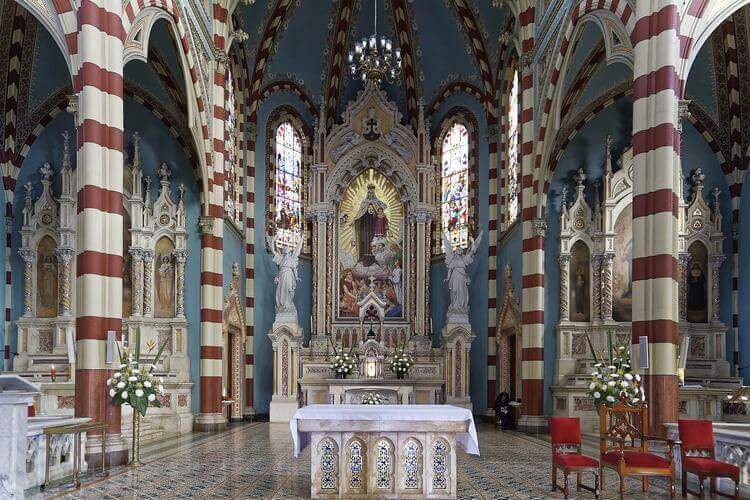
In La Candelaria, make time for the National Sanctuary of Our Lady of Carmen, or Santuario Nacional de Nuestra Señora del Carmen.
This church is dedicated to the Virgin Mary and is a Catholic church.
Its red-and-white, candy-cane-like exterior makes it easy to recognize.
Find it in the historic area of Bogotá, specifically in the barrio La Candelaria.
Its neo-Gothic architecture rewards a closer look.
The shrine of this building was declared a National Monument on April 30, 1993.
You can’t miss it as you walk through the old town; the imposing structure adds a bright pop of color to the historical and colonial-style streets of the city.
The sanctuary was consecrated in 1938.
Plan your visit
- Location: La Candelaria, in the Salesian complex around Carrera 5 and Calle 8.
- Best for and time: Architecture and a short quiet stop; allow 15–30 minutes if access is available.
- Cost: Exterior viewing from the public street is free; no verified regular tourist admission tariff.
- Hours and access: An active place of worship; visitor access follows services and local opening. A dependable daily tourist timetable was not confirmed.
- Booking and transport: Combine with Museo Botero; ask before photographing inside and avoid interrupting services.
9. A La Candelaria graffiti tour
Recommended by Patrick from German Backpacker

One of the best things to do in Bogotá is going on a Graffiti tour around La Candelaria, the historic city center of Bogotá.
The Colombian capital is famous and known for its extensive street art culture. By walking through the city’s streets, you will quickly realize and see all the paintings, which are literally around almost every corner.
While you can look at the paintings by yourself, I suggest going on a graffiti walking tour to learn more about the history and stories behind them.
There are tip-based and fixed-price street-art walks; check the chosen operator’s current schedule and payment model.
I enjoyed my tour a lot, and it was entertaining and interesting to hear the stories behind the art.
Plan your visit
- Location: La Candelaria and surrounding central streets, according to the selected walk.
- Best for and time: Street art and its social context; about 2–3 hours.
- Cost: Choose either a tip-based walk or a prepaid tour; compare what you are actually paying for.
- Hours and access: Book the current departure; murals and walking routes change.
- Booking and transport: A general history walk and a graffiti walk may overlap. Start with one if you have only a day in Bogotá.
Bogotá Graffiti Tour offers a tip-based La Candelaria walk; the prepaid Capital Graffiti Tours product below is a separate option. Its shared option says the prepaid amount covers the expected guide contribution, so do not automatically pay it twice; confirm any optional extra tip and the chosen language.
The paid listing includes several language options, but a German-speaking guide is only confirmed by the selected departure. The contributors’ earlier tours are not endorsements of every current operator.
10. Andrés Carne de Res and Andrés D.C.
Recommended by Megan & David from Half This World Away

For an eating experience that becomes a whole evening out, consider Andrés Carne de Res.
The appeal is the combination of food, theatrical decoration and dancing.
The original restaurant is in Chía, outside Bogotá; Andrés D.C. is the city option in Zona Rosa. Decide which atmosphere you want before arranging transport or making a reservation.
Whether you travel to Chía or stay in Bogotá, the surreal décor is a major part of the experience.
Choose it for a lively evening rather than a quiet conversation over dinner.
Plan your visit
- Location: Chía: Calle 3 #11A-56. Andrés D.C., Bogotá: Calle 82 #12-21.
- Best for and time: Dinner and entertainment; allow an evening plus travel for Chía.
- Cost: Pay for food/drinks; confirm any cover, event or reservation conditions for your date.
- Hours and access: Hours differ by branch and day; Chía lists Monday closure. Check the selected venue, including holiday exceptions.
- Booking and transport: Reserve the correct branch and organize the return journey. Chía is not a short walk from La Candelaria.
11. International Emerald Museum
Recommended by Margarita from DownshiftingPro
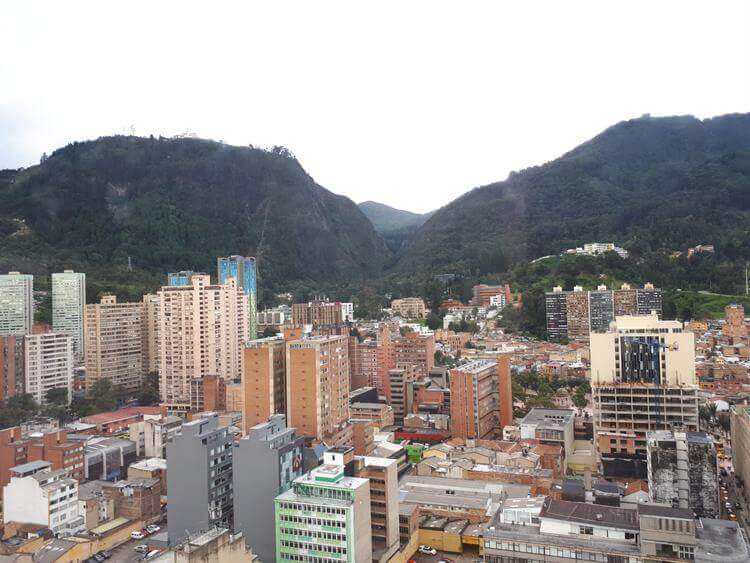
Do not miss the Emerald Museum when you visit Bogotá. It’s a small museum tucked away on the 23rd floor of the Avianca Building in downtown Bogotá.
My cousin has lived here her whole life and never knew it existed. It is conveniently located across the plaza from the more famous Museo de Oro (the Gold Museum) and el Banco de la Republica.
The Emerald Museum has a unique tour through a re-created “mine” simulating what a vein of emeralds looks like.
As you progress down the corridor, the guide lights up each station to divulge what it takes to create one of the most expensive gems in the world.
You will see examples of Colombian emeralds on display.
This is a tiny exhibition (not really a museum), but there is a jeweler on-site to assist you should you desire to buy one.
Treat any jewelry purchase as a separate decision; a museum visit is not an independent guarantee of value or authenticity.
The city views were a bonus on my visit; ask staff about current photography rules.
Plan your visit
- Location: Calle 16 #6-66, Avianca Building, 23rd floor.
- Best for and time: Gemstones and mining interpretation; allow 45–60 minutes.
- Cost: Operator lists COP 8,000 general admission and COP 14,000 VR experience, checked October 2026; confirm which ticket you want.
- Hours and access: Closed Sundays/holidays. Weekday and Saturday opening times vary; the website contradicts itself on Saturday, so confirm directly.
- Booking and transport: Contact the museum for building access and the guided visit. Shopping is optional, not a reason to skip independent checks on an expensive purchase.
A three-day Bogotá itinerary
- Day 1: La Candelaria. Choose a history or street-art walk, then Museo Botero and the Carmen sanctuary if open. Leave time for lunch and coffee instead of booking a second overlapping walk.
- Day 2: Monserrate and the Gold Museum. Use a clear-weather window for the viewpoint and keep the museum for the other half of the day. The Emerald Museum is an optional nearby addition if it fits its opening days.
- Day 3: Zipaquirá. Keep the day for transport, the Salt Cathedral and a meal. Avoid a fixed early dinner reservation back in Bogotá because road traffic can disrupt the return.
- With a fourth day: add a cooking class, or make a Sunday morning about Ciclovía. Reserve Andrés D.C. on a separate evening if you want dinner and nightlife without the Chía journey.
Adjust the order to your travel dates
This is a route outline, not a Monday-to-Wednesday calendar. The Gold Museum closes Monday, Botero closes Tuesday, and the Monserrate footpath also closes Tuesday. With only one day, focus on La Candelaria plus either Monserrate or a museum; leave Zipaquirá for another stay.
Where to stay and how to get around Bogotá
Choose your base around the evenings you want. La Candelaria is practical for daytime history and museums; Chapinero or the Zona Rosa area may suit a restaurant-focused stay better, but sightseeing in the center then involves transport.
Check the hotel’s exact street, recent access advice and tour pickup coverage. A neighborhood name alone does not guarantee quiet surroundings, walkability or safety.
El Dorado International Airport serves Bogotá. Use the airport’s official transport information for authorized taxi and public-transport arrangements; request a current fare or transfer quote instead of relying on an old fixed dollar amount.
Group sights by area and leave a traffic buffer between reservations. Our guide to getting around Colombia helps with onward travel beyond Bogotá.
Weather, altitude and everyday planning
Bogotá sits around 2,600 meters above sea level. Bring layers and rain protection rather than packing as if the capital had Colombia’s Caribbean climate; Colombia’s official Bogotá guide describes mild days and cooler nights.
Keep your arrival day flexible, and do not make a steep hike the first fixed commitment. Use the weather forecast to choose Monserrate, and have a museum or cooking experience ready for a rainy period.
Carry only what you need, keep phones and valuables discreet, and arrange transport for late returns. Avoid demonstrations and follow current official Colombia safety advice.
For the broader trip, read why visit Colombia and compare our South America destination ideas. Give Bogotá dedicated days rather than trying to see it between two flight connections.
Bogotá FAQs
How many days do you need in Bogotá?
Allow three full days for a first visit that includes La Candelaria, Monserrate, a major museum and a Zipaquirá day trip. Four days makes room for a cooking class or Ciclovía without rushing. With two days, concentrate on the city and leave the Salt Cathedral for another trip.
What are the best free things to do in Bogotá?
Museo Botero has free admission, while walking or cycling on the designated Ciclovía route has no participation fee. La Candelaria’s public streets can be explored independently. A “free walking tour” is different: guides normally expect a contribution, and bike rental or food adds to the cost.
Is Bogotá safe for tourists?
Avoid a blanket yes or no: theft and other crime remain risks, including in places visitors use. Keep valuables discreet, arrange reputable transport and ask your accommodation about current local conditions. Follow official travel advice and avoid demonstrations; a contributor’s positive past visit is not a present-day safety guarantee.
Should you walk or take transport up Monserrate?
Choose the walking trail if you want a strenuous uphill outing and its access schedule suits your day. The cable car or funicular is the more practical choice if your priority is the view rather than the climb. Check which service is operating; the footpath and transport have different schedules.
Is the Salt Cathedral in Bogotá?
No. The Salt Cathedral is in Zipaquirá, outside Bogotá, and works better as a separate day trip. Check whether a tour price includes entrance or only transport and guiding. Arrange a return journey and allow for traffic rather than relying on an old taxi-price estimate.
Should you book both a history and graffiti walking tour?
Only if you have enough time and want both perspectives. Routes can overlap in La Candelaria, even though a history walk and an art-focused tour tell different stories. On a short stay, choose the subject that interests you most and use the remaining time for a museum or food experience.
What should German-speaking visitors check before booking a tour?
Confirm the guide language on the specific date and option, not just the language of the booking website. A German audio guide is different from a German-speaking live guide. Check the meeting point, pickup coverage, admission exclusions and total price before paying.
Which Andrés Carne de Res location should you choose?
Choose the original Chía venue if the restaurant outing itself is a priority and you are willing to arrange transport outside Bogotá. Andrés D.C. in Zona Rosa is more practical for staying in the city. Reserve the correct branch and check current hours and event conditions.

- About the Author
- More info
Pauline has a bachelor’s degree in Tourism and is a professional content writer. She specializes in writing about travel and food. Pauline spent most of her career life in Dubai and is a Travel Expert for the United States and Costa Rica.