
What Getting Lost Taught Me About Travel, Adventure and Finding Yourself

I was supposed to stay in the town I grew up in.
I had a very humble upbringing in the Midwestern United States and went to a university just 45 minutes from home. I was working full-time in the finance department of a large toy manufacturing company while carrying a full course load and paying my own way through college.
My life was a cubicle, while my college years were passing me by and my experience of everything beyond that 45-minute radius was limited.
I had been told that success meant getting a degree, working hard, and getting ahead. So that’s what I was doing.
Except I was miserable.
As a young child, I found joy playing in the creek behind my house and roasting marshmallows over backyard bonfires. Raiders of the Lost Ark was my favorite movie because I was fascinated by history and other cultures, and I was absolutely certain I was going to be an archaeologist someday.
It wasn’t really the digging-up-bones part that interested me as much as the idea of discovering how other people lived and understanding worlds completely different from my own.
Somewhere along the way, though, that curious little girl had been replaced by a young woman sitting in a cubicle. At work, I would volunteer to shred endless piles of obsolete office documents simply so I could stand next to the window and stare outside.
More and more, I’d find myself lingering there, looking out and asking myself, Is this really the life I want?
At the end of my second year of college, I was barely keeping everything together. Working five days a week and taking night classes was taking its toll.
I still didn’t have enough money for rent or textbooks, and my grades were starting to slip. Around the same time, I met a guy who told me he was moving to Maine in two weeks following final exams, and asked if I wanted to go with him.
My first thought? All the reasons I couldn’t and shouldn’t.
I was told I’d ruin my life if I left. I was supposed to get my degree, get a good job, work hard, and build a secure future. Walking away from all of that felt irresponsible and reckless… like failure.
But it never occurred to me that maybe I was ruining my life by staying.
Three days before my boyfriend left, I quit my job and told my parents I was moving to Maine.
I was terrified.
But as it turned out, the guy had very little to do with it. Maine was the first crack in the life I had been told I was supposed to want. For the first time, I realized there was a whole enormous world outside my little 45-minute radius, and I wanted to see all of it.
Learning to Leave
I learned to backpack and camp. I discovered different foods and music and landscapes and ways of living. I started to understand that the way I had grown up wasn’t the only way to live, or even necessarily the way I wanted to live.
After a year in Maine, I went back home. And almost immediately, I couldn’t wait to leave again.
This time, I moved to the opposite coast. I spent two years in AmeriCorps immersed in environmental living, working in the mountains and forests and learning about sustainability. My horizons kept expanding, and with them came an insatiable appetite for adventure and exploration.


When Adventure Doesn’t Go According to Plan
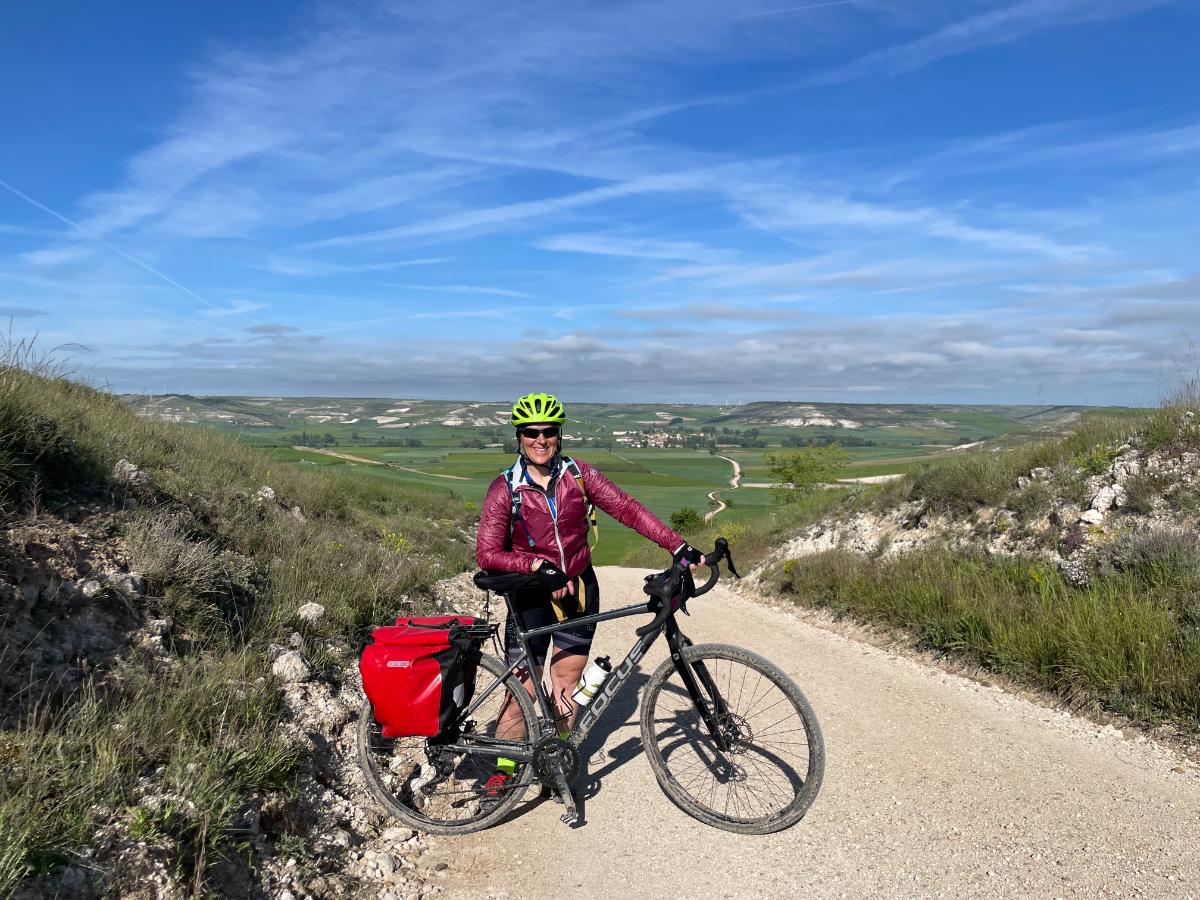
I whitewater rafted the White Salmon River, climbed to the summit of Mount Adams, trekked to Everest Base Camp, lived in Australia alongside giant spiders, venomous snakes and feisty kangaroos, biked across northern Spain on the Camino de Santiago, powered through New Zealand’s Milford Track after running out of food, and hobbled my way over Peru’s Salkantay Pass.
And I say all of that not to prove how adventurous I’ve been, but because somewhere along the way, adventure became the way I learned: about other people, about customs, about places I’d never imagined, and, more than anything, about myself.
Getting Lost on the Camino


One of the places that taught me the most was northern Spain. After the first day of cycling the Camino de Santiago, I almost quit.
Everything seemed to be working against me: my body, my Spanish (which sucks), the food, the eating schedule, the fact that I was on a bicycle instead of walking, losing my phone, shitty maps, and unfriendly peregrinos.
I’d lean my bike in the wrong place and get yelled at. Hikers would spit at my bike. Other cyclists either laughed at me or ignored me altogether. Café owners would shoo me and my bicycle away, shouting faster than I could possibly comprehend.
I was frustrated. I was exhausted. I was embarrassed. And I was seriously considering being done.
So I did what any mature, seasoned adventurer would do: I had a complete and utter meltdown. We’re talking ugly crying with a drippy-snot nose and tear-caked face. “I can’t do this,” I sobbed on the floor of my albergue.
But then the next day, I got back on my bike.
Sixteen days later, I rolled into Santiago de Compostela. Broken and grateful.


That experience probably taught me more about adventure than any summit ever could. Because adventure isn’t always the breathtaking view or the triumphant arrival at the top of a mountain. Sometimes it’s sitting on the side of a road wondering what the hell you’ve gotten yourself into and deciding to keep going anyway.
And sometimes, you don’t even know where you’re going.
I’ve also learned that literally getting lost isn’t nearly as frightening as it feels in the moment. On my Camino journey in Spain, I once found myself on a desolate gravel road surrounded by farmland with absolutely no idea where I was.
Eventually, I navigated my way to a small town outside León called Villares de Órbigo, where I was kindly greeted by a happy little fella named D. Gumersindo. To this day, somewhere on his photo-filled wall of peregrinos is a selfie of him and me.

I had no plan. I had no idea where I was going. And yet, somehow, getting lost had taken me exactly where I needed to be.
Maybe that’s one of the greatest things travel has taught me. The map can tell you where you’re supposed to go, but it can’t tell you who you’ll meet along the way. It can’t tell you what you’ll experience. It can’t tell you what happens when the plan falls apart. And it certainly can’t tell you who you’re going to become because of it.
Rethinking What Luxury Means
That lesson has changed the way I think about luxury, too.
After spending decades traveling through remote places, I’ve developed a very different definition of it. When you’re hundreds or thousands of miles from home, luxury isn’t necessarily what someone can sell you.
Sometimes luxury is clean socks and underwear. We’re talking five-star luxury if there’s a hot shower. And after enough days of eating whatever you can carry, anything other than an RX Bar can feel like a celebratory event.
But perhaps the greatest luxury I’ve found is something you can’t book at a resort: another human being willing to help you when you are lost, exhausted, and completely out of your element.
That’s what keeps me going.
I left home because I thought I needed to find a different life. What I found instead was a much bigger world. And somewhere along the way, I found a version of myself I didn’t know existed.
I still don’t know exactly where the road will take me next. But after all these years, I’m pretty sure that’s the point.

- About the Author
- More info
Risa August is an award-winning author, screenwriter, TEDx speaker, Gestalt practitioner, and patient advocate. Her work explores transformation, curiosity, connection, and what it means to create a life beyond the one we thought we were supposed to live. Her memoir, The Road Unpaved, chronicles the unexpected journey that followed a brain tumor diagnosis and became a catalyst for profound personal change. Risa brings that same curiosity and willingness to embrace the unknown to her writing, speaking, creative work, and everyday life.

