
The Other Side of the Brochure: An Ecuador Founder’s Story

From planting coffee as a Galapagos volunteer to co-founding Midland Travel, Valérie Frossard’s honest look at staged tourism versus the real thing in Ecuador.
The best day of my volunteer work in the Galapagos Islands was the day my hands hurt the most. It was hot and humid in the highlands of San Cristobal Island, and I spent the whole afternoon pulling out blackberry shrubs. I stung my fingers about a hundred times. Blackberry is an invasive species, and every shrub I tore out gave space back to the native plants. For once, I knew exactly why I had come.
It was the only afternoon of the month that felt that way.

I had come a long way for that afternoon. After high school in Switzerland, I had no idea what to study, let alone what to do with my life. For a long time, I wanted to become a doctor, but then I fainted at the vet, and medicine was off the table.
So, I worked at McDonald’s, saved money, and looked for a trip that would teach me something. Then I found an offer for one month of Spanish school in Quito and one month of volunteer work in the Galapagos. Upon reading “Galapagos Islands”, I was sold. The islands had been a faraway fantasy since I was a child. Suddenly, they were within reach.
In January 2012, at age 20, I landed in Ecuador.

In my head, I would be saving baby turtles by twilight or teaching English to school kids. Instead, I planted coffee in the highlands. Most of the other volunteers were from the US and didn’t speak Spanish, and the person in charge of us was Swiss. So much for practicing my Spanish.
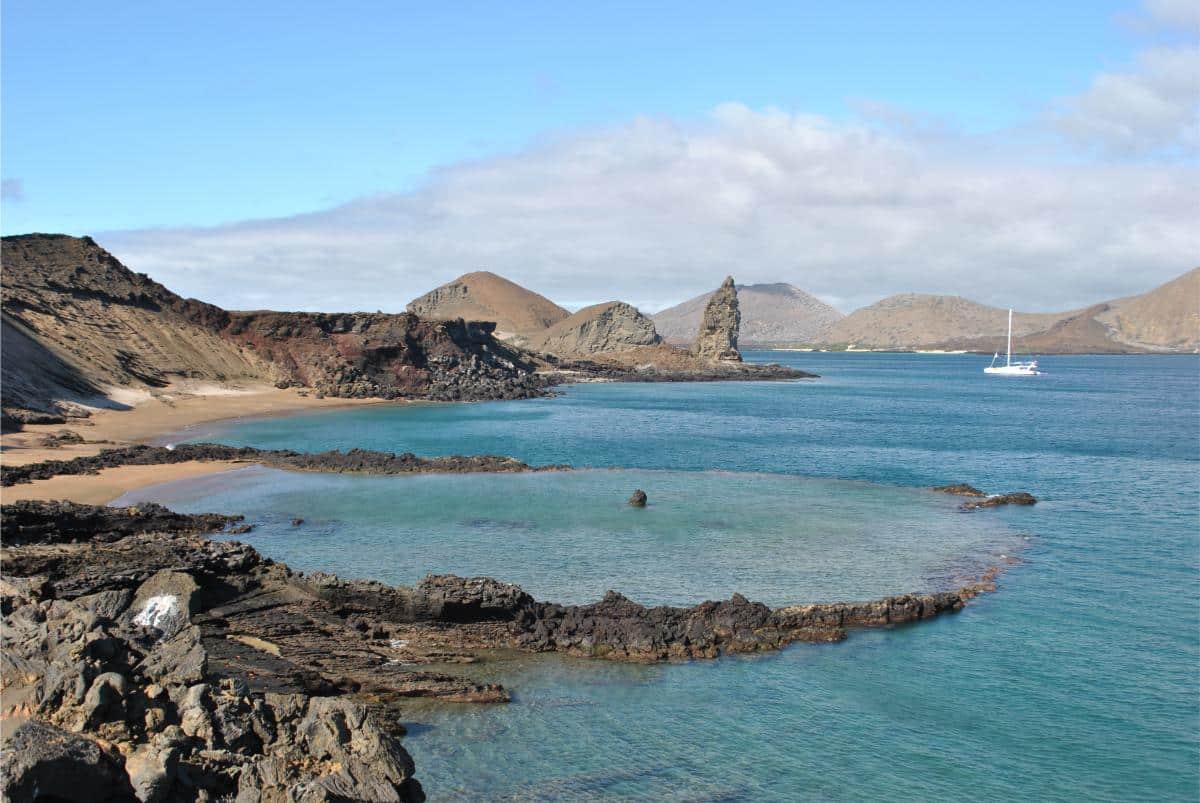
Don’t get me wrong, I still loved my first Galapagos stay. Seeing sea lions, giant tortoises and marine iguanas for the first time was WOW and a childhood dream come true. But the volunteer program was an eye-opener. At home, trips like mine were sold as meaningful travel with a purpose. On the ground, I saw the business behind it.

I didn’t know yet that I would spend my career on the other side of that brochure.
At the end of my month in Quito, just days before leaving for the Galapagos, I met my now husband through some weird (or divine?) circumstances. We stayed in touch across the ocean for six months. Then, on August 28, 2012, I moved to Quito, and in October we founded Midland Travel.
Eight months after aimlessly planting coffee, I was building a tour operator and a new life, both with purpose. I had never worked in tourism, never lived outside my home country and there were obvious cultural differences, but lovebirds couldn’t care less.
Those first months were a crash course. My husband handled the Galapagos and Amazon tours, his area of expertise, and I took over the Ecuadorian clients who came to our office for flights and trips abroad.
But try understanding someone from the coast when your ear is used to the slower, clearer Spanish of the Andes. More than once, I sent my husband a Skype message to ask him what the client sitting in front of me actually wanted. Some of those first clients still travel with us today.
Then came the Cotopaxi eruption, the earthquake on the coast, Zika, and the pandemic. I was typically Swiss and worried about everything, even things I couldn’t influence. My husband led us through every crisis with a calm and resilience that I had to learn. We have contingency plans, but I no longer rack my brains over a flight that might be cancelled. If it happens, I deal with it.

Through the years, I also gained the confidence to become the kind of travel agent I wanted to be, promoting the type of travel I cared about: slower trips with deeper connections and more community-based stops instead of just stacking highlights.
One of the first trips where I was able to build on this confidence was my mother’s second trip to Ecuador. She wanted to stay at a specific lodge in the Amazon, and I had already reserved her space.
Shortly after, I traveled to the Amazon myself and asked a veteran naturalist guide about his experiences with different lodges. About the lodge I had booked for my mom, he didn’t hesitate: a lot of show. The encounters with the local communities were put on for visitors.
I thought of my coffee planting experience in the Galapagos and booked my mom into another lodge.
My mom was hesitant at first, but she trusted me. She spent five nights at a lodge owned and operated by a local community, where every excursion has a real impact and genuine cultural exchange is the core of their business.

The funny part? I don’t think they even realize it themselves. Look at their marketing, and it is all about nature. My mom had the most amazing time.
Not every client is my mother, of course. I always point out community-based and more sustainable options, but in the end, the client decides. I am also a fierce promoter of mainland Ecuador and still get frustrated when travelers treat Quito like a stepping stone to get to the Galápagos Islands. The islands are one of the most extraordinary places on the planet, but Ecuador is worth the trip with or without them.
At the foot of Chimborazo Volcano, there is a community whose life is centered on llamas. The women show you around, explain their way of life, and prepare your lunch, llama meat included. North of Quito, a family of Quitu-Cara descendants invites visitors into their home to share ancient rituals and ancestral knowledge, so this heritage doesn’t get lost.

One of my favorite trips to organize was a full month on the mainland for a couple: no Galapagos, no deep jungle, only the Andes and the coast at a slow pace. That pace left room for small community projects that never fit into a rushed itinerary.
Sometimes I wonder what I would write back if my 20-year-old self sent me an inquiry, looking for a meaningful month. I wouldn’t send her to plant coffee. I would send her to Yanacocha, a wildlife rescue center in the Amazon that rehabilitates animals, protects the forest, and educates locals. They are always in need of volunteers.
She would still get her hands dirty, and she would probably sting her fingers a few times. But every day would feel like that afternoon with the blackberries.
- About the Author
- More info
Valérie Frossard is a Swiss-born Ecuador and Galápagos destination expert. 14 years of experience, 8 Galápagos expeditions. She arrived in Ecuador in 2012, and what was supposed to be a two-month stay for Spanish classes in Quito and voluntary work in the Galápagos Islands, turned into a business venture, a family, and dual citizenship.
Since October 2012, Valérie has helped run Midland Travel, a Quito-based travel agency and tour operator, and designs personalized Ecuador journeys. With 8 Galápagos expeditions, 14 years behind the scenes of Ecuador travel, and thousands of travelers served, she writes about Ecuador from lived (personal and professional) experience, not search results. She aims to inspire and make Ecuador travel planning easier.


