Annapurna Circuit Trek: 13-Day Itinerary, Thorong La, Costs and Best Time

This is a sponsored feature produced in partnership with Nepal Hiking Team.
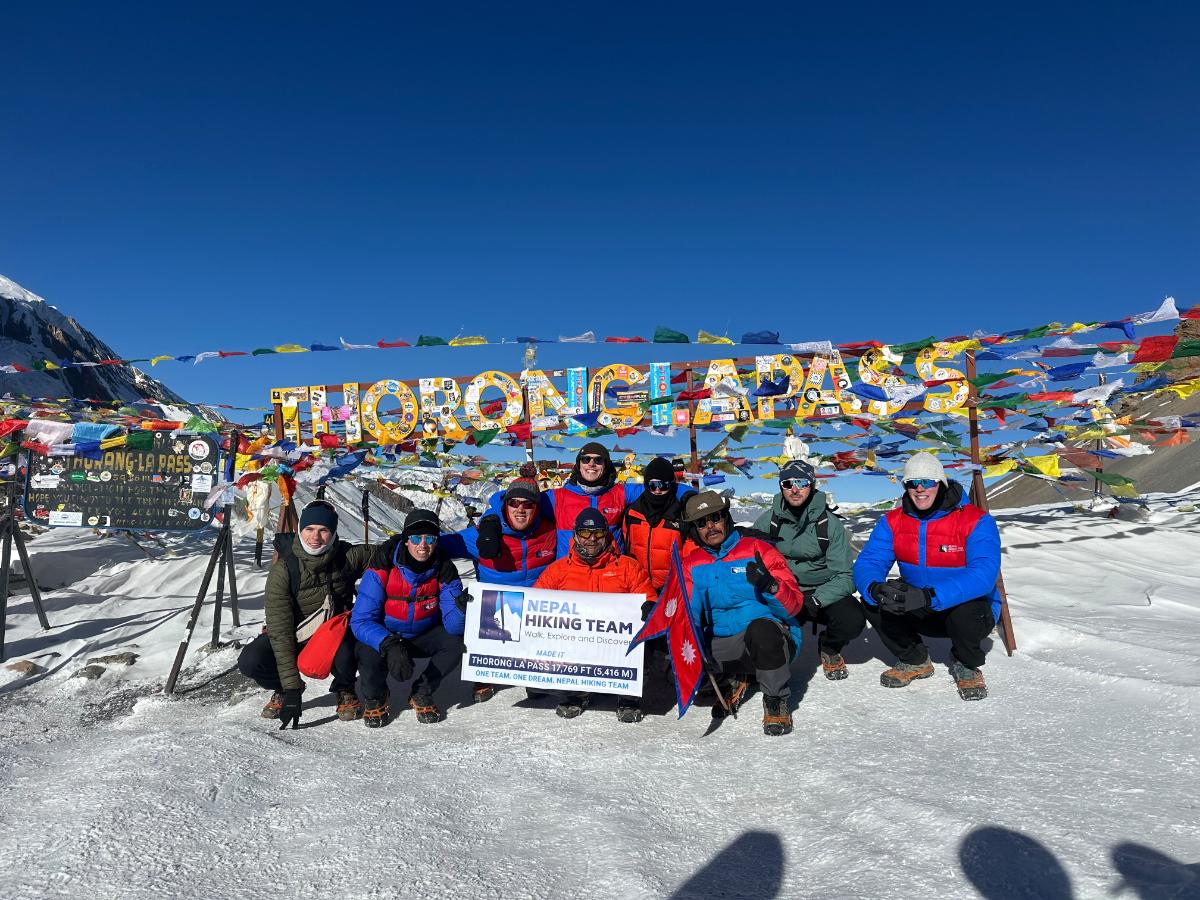
The Annapurna Circuit is a 13-day trek in central Nepal that climbs from green river valleys to Thorong La, a 5,416-meter pass, before dropping to the temple town of Muktinath.
On the itinerary run by Kathmandu operator Nepal Hiking Team, that means nine walking days and roughly 80 to 90 kilometers on foot.
Few treks change this much in a week. You start among rice terraces and pine forest and finish in a high, wind-carved desert on the edge of Tibet.
This guide covers the full 13-day route, the Thorong La crossing, costs, safety and the best time to go, with first-hand advice from the founders of Nepal Hiking Team.

Annapurna Circuit at a glance
- Duration: 13 days from Kathmandu, including 9 walking days
- Highest point: Thorong La, 5,416 m (17,769 ft)
- Walking per day: 3 to 8 hours, about 80 to 90 km in total
- Difficulty: Moderate to strenuous, because of altitude rather than technical terrain
- Best time: March to May and September to November
- Permit: Annapurna Conservation Area Permit (NPR 3,000 for foreign trekkers)
- Price with Nepal Hiking Team: US$1,090 to US$1,350 per person, depending on group size
- Operator: Nepal Hiking Team, family-run in Kathmandu since 2009
How difficult is the Annapurna Circuit trek?
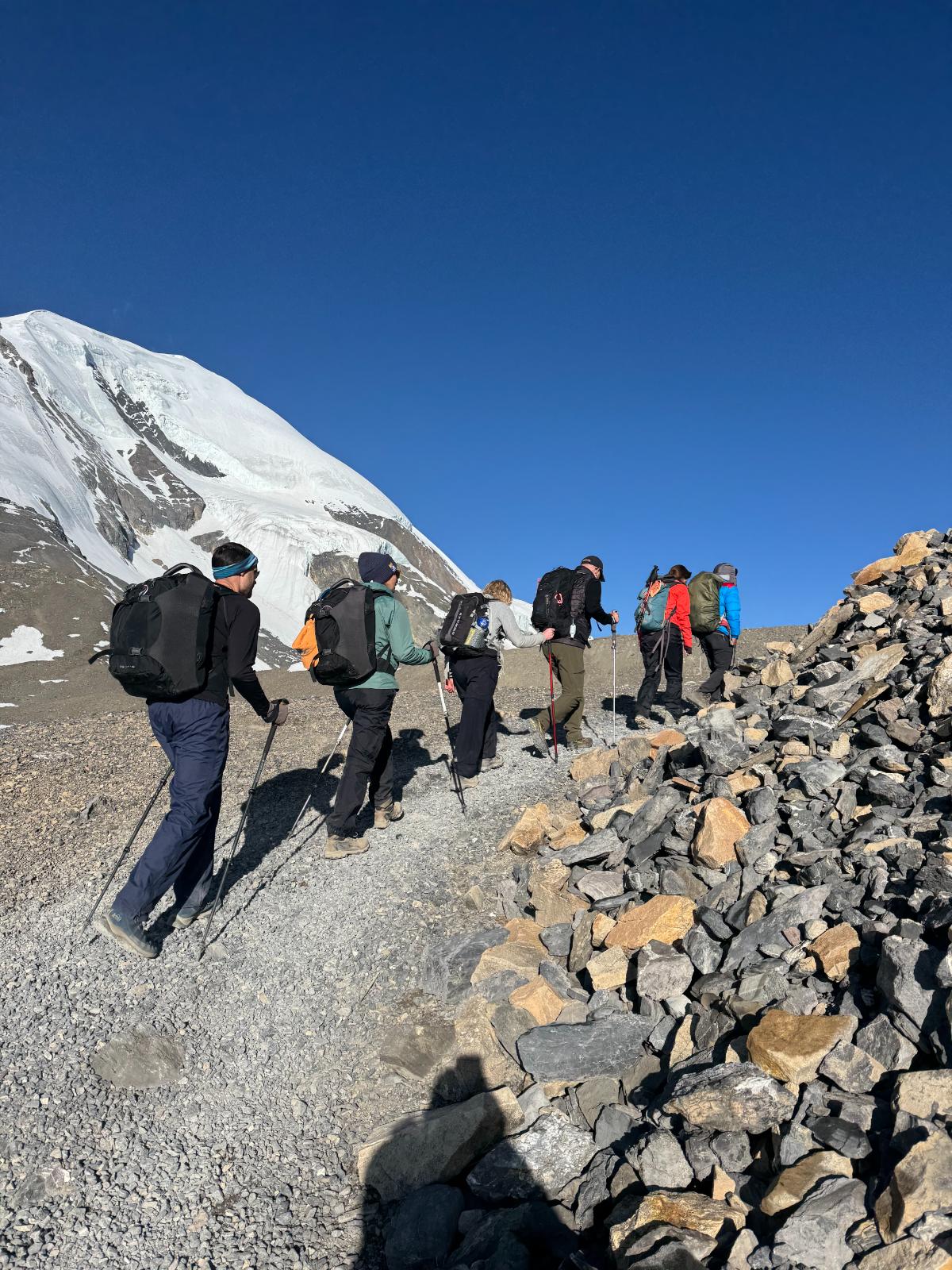
The Annapurna Circuit is a moderate to strenuous trek, and its hardest day is the Thorong La crossing: 16.5 km and 7 to 8 hours from about 4,450 meters.
The trail itself is not technical. What makes it demanding is altitude, the cold above 4,000 meters, and walking several days in a row.
Nepal Hiking Team recommends several weeks of preparation, such as hiking, stair climbing, cycling or jogging. You should be comfortable walking uphill, downhill and on uneven ground for several consecutive days.
Can beginners do the Annapurna Circuit?
Yes, fit beginners can do the Annapurna Circuit if the itinerary allows enough time to acclimatize, including a rest day in Manang at 3,540 meters.
Most of Nepal Hiking Team’s Annapurna Circuit guests come from Australia, the United States, the United Kingdom and the rest of Europe. They are typically 35 to 40 years old.
Many have hiked before, but for some this is their first time at high altitude. “Our itinerary is carefully designed with appropriate acclimatization and a manageable walking schedule,” says co-founder Ganga Raj Thapa.

Annapurna Circuit itinerary: 13 days day by day
Nepal Hiking Team’s 13-day Annapurna Circuit starts with a drive from Kathmandu to Dharapani and ends with a jeep ride from Muktinath to Pokhara.
| Day | Route | Overnight altitude | Distance | Time |
|---|---|---|---|---|
| 1 | Arrive in Kathmandu | 1,400 m | n/a | n/a |
| 2 | Drive Kathmandu to Dharapani | 1,860 m | 228 km by road | 8 to 9 h |
| 3 | Trek Dharapani to Chame | 2,670 m | 15 to 16 km | 6 h |
| 4 | Trek Chame to Upper Pisang | 3,300 m | 14 to 15 km | 5 h |
| 5 | Trek Upper Pisang to Ngawal | 3,660 m | 10 to 12 km | 4 to 5 h |
| 6 | Trek Ngawal to Manang | 3,540 m | 8 to 10 km | 4 to 5 h |
| 7 | Acclimatization day in Manang | 3,540 m | Short hikes | Flexible |
| 8 | Trek Manang to Yak Kharka | 4,050 m | 9 to 11 km | 3 to 4 h |
| 9 | Trek Yak Kharka to Thorong Phedi | 4,450 m | 6 to 7 km | 3 to 4 h |
| 10 | Cross Thorong La (5,416 m) to Muktinath | 3,760 m | 16.5 km | 7 to 8 h |
| 11 | Jeep Muktinath to Pokhara | 822 m | 168 km by road | 7 to 8 h |
| 12 | Bus Pokhara to Kathmandu | 1,400 m | 204 km by road | 7 to 8 h |
| 13 | Departure from Kathmandu | n/a | n/a | n/a |
Days 2 to 4: Dharapani, Chame and Upper Pisang
Driving to Dharapani skips the lowest and most road-heavy part of the valley. From there, the trail follows the Marsyangdi River through pine forest and over suspension bridges.
By Upper Pisang, at 3,300 meters, Annapurna II fills the skyline. This is where the trek starts to feel truly Himalayan.


Days 5 and 6: the high trail from Upper Pisang to Ngawal and Manang
Instead of following the valley floor, Nepal Hiking Team takes the upper trail through the stone villages above the river. It is the founders’ favorite stretch of the whole circuit.
“This spectacular trail offers panoramic views of the Annapurna mountains, traditional Himalayan settlements, and a wonderful opportunity to experience local culture,” says Ganga.

Day 7: acclimatization in Manang
The rest day in Manang is the most important day for safety on the whole trek. Short hikes, such as the walk up to Gangapurna Lake, help the body adjust before you sleep higher.
The trek also includes an altitude briefing from the Himalayan Rescue Association in Manang.


Days 8 to 10: Yak Kharka, Thorong Phedi and the pass
The two days after Manang are deliberately short, at 3 to 4 hours each. They gain height slowly before the big day over Thorong La.
Trek the Annapurna Circuit with Nepal Hiking Team
The 13-day trek includes a licensed guide, porters, all meals on the trail, permits and transport. Prices start at US$1,090 per person.
Is the Annapurna Circuit still worth it with the new roads?
Yes, the Annapurna Circuit is still worth it, because traditional walking trails avoid much of the jeep road that now runs up the valley.
Nepal Hiking Team follows the New Annapurna Trekking Trails (NATT) wherever possible. “We avoid walking along motor roads unless there is no practical alternative,” says Ganga.
The road does have one advantage. After the pass, it shortens the return to Pokhara to a single day by jeep.
That ride is long and bumpy, and it surprises many guests. Knowing what to expect makes it easier, and the views of the Kali Gandaki valley help.

Crossing Thorong La Pass (5,416 m): what the day is like
Thorong La day starts at around 4:00 am and takes 7 to 8 hours, climbing almost 1,000 meters to the pass and descending more than 1,600 meters to Muktinath.
The early start leaves time to cross before the afternoon, when the weather is more likely to turn and the wind picks up.
Nepal Hiking Team’s guides keep a slow, steady pace with regular breaks. They watch every trekker closely on the climb.
Before setting off, guides check the forecast, the trail and everyone’s health. Heavy snow, strong wind, poor visibility or a medical concern can mean postponing the crossing or turning back.
“For us, reaching Thorong La is an incredible achievement, but bringing everyone back safely is always more important.”
Ganga Raj Thapa, co-founder, Nepal Hiking Team
Expect real cold at Thorong Phedi and strong wind after the pass. Windproof layers and a warm down jacket are essential, and Nepal Hiking Team provides the jacket.


Altitude sickness and safety on the Annapurna Circuit
The best protection against altitude sickness on the Annapurna Circuit is gaining height slowly, with a rest day in Manang and short days above 4,000 meters.
Nepal Hiking Team’s guides check every trekker’s oxygen saturation each evening with a pulse oximeter. They also watch for symptoms such as headache, poor sleep and loss of appetite.
All of their guides hold Advanced Wilderness First Aid training. They carry an oximeter, oxygen and a medical kit.
If someone falls ill, a guide or porter stays with them or walks them down. The rest of the group can continue with the main guide if conditions allow.
In a severe emergency, the team arranges a helicopter evacuation to Kathmandu, weather permitting, and helps you deal with your insurer.
Travel insurance that covers trekking to 5,500 meters and helicopter evacuation is mandatory. “Guest safety always comes before completing the itinerary,” says Ganga.
A typical day on the Annapurna Circuit
A typical day on the Annapurna Circuit starts with breakfast at about 7:00 am and ends with dinner between 6:00 and 7:00 pm in a teahouse.
- 7:00 am: Breakfast at the teahouse
- 8:00 am: Start walking
- 12:00 to 1:00 pm: Lunch at a teahouse along the trail
- Afternoon: Arrive, rest, explore the village or take in the views
- 6:00 to 7:00 pm: Dinner, then an early night
Many guests say the conversations with their guides are a highlight. Guides share stories from their years in the mountains and explain local customs along the way.
Teahouses offer twin rooms, mostly with attached bathrooms below Yak Kharka. Charging and Wi-Fi cost extra, and Wi-Fi is often slow after Manang, so bring a power bank.
ATMs exist in Chame, Manang, Muktinath and Jomsom, but they are unreliable. Carry enough Nepali rupees from Kathmandu.


Culture on the Annapurna Circuit: villages, monasteries and Muktinath
The Annapurna Circuit passes through Buddhist mountain villages and ends at Muktinath, a temple sacred to both Hindus and Buddhists.
Upper Pisang and Ngawal show the traditional stone architecture and village life of the upper valley. Prayer flags and mani walls line the trail.
Braga Monastery, near Manang, is one of the oldest in the region and an easy visit on the acclimatization day.
“We believe these cultural encounters are just as valuable as the mountain views,” says Ganga. His guides explain the stories and beliefs behind each place.


How much does the Annapurna Circuit trek cost?
The 13-day Annapurna Circuit with Nepal Hiking Team costs US$1,090 to US$1,350 per person, depending on group size.
| Group size | Price per person |
|---|---|
| 1 trekker | US$1,350 |
| 2 to 4 trekkers | US$1,195 |
| 5 to 7 trekkers | US$1,150 |
| 8 to 10 trekkers | US$1,100 |
| 11 to 15 trekkers | US$1,090 |
What’s included
- A licensed, English-speaking guide, plus an assistant guide for every five trekkers
- One porter for every two trekkers, carrying up to 25 kg
- Breakfast, lunch and dinner on the trek, with tea or coffee
- Teahouse accommodation and hotel breakfasts in Kathmandu and Pokhara
- All ground transport, including the jeep from Muktinath to Pokhara
- The Annapurna Conservation Area Permit
- A down jacket, sleeping bag and duffel bag for the trek
What’s not included
- Travel insurance, which is mandatory
- Lunch and dinner in Kathmandu and Pokhara
- Hot showers, charging, Wi-Fi, snacks and drinks on the trail
- Tips for guides and porters
- The optional flight from Pokhara to Kathmandu (US$115)
Booking takes a 20% deposit, which stays valid as credit for a future trip if your plans change. The balance is paid in Kathmandu before the trek.
Do you need a guide for the Annapurna Circuit?
Yes, since April 2023 Nepal requires foreign trekkers in its national parks and conservation areas, including the Annapurna region, to trek with a licensed guide.
Beyond the rule, a good guide handles the parts that matter most at altitude. That means pacing, acclimatization, reading the weather and making the call on Thorong La.
Nepal Hiking Team’s founders started out as porters and guides themselves. Ganga began as a porter in 1992 and Balaram in 1998.
That background shapes how they treat their staff. Guides and porters receive proper equipment, warm clothing, insurance and fair wages, and porters never carry more than 25 kg.
Guests often say the encouragement from guides and porters is what got them over Thorong La.
“A successful Himalayan journey is not only about reaching a destination,” says Ganga. “It is also about the people who make that experience possible.”
Best time to trek the Annapurna Circuit
The best time to trek the Annapurna Circuit is March to May or September to November, when the weather is most stable and Thorong La is usually open.
| Season | Months | What to expect |
|---|---|---|
| Spring | March to May | Clear mornings, warmer days, rhododendrons in bloom lower down |
| Autumn | September to November | The most popular season, with crisp air and clear mountain views |
| Winter | December to February | Very cold, and snow can close Thorong La for days |
| Monsoon | June to August | Rain and leeches on the lower trail, but fewer trekkers |
Mountain weather can change quickly in any season, so build flexibility into your plans. If you’re considering the rainy months, read our article of trekking the Annapurna Circuit in monsoon season.
Annapurna Circuit vs Everest Base Camp
The Annapurna Circuit offers more variety in landscape and culture, while the Everest Base Camp trek is an out-and-back route focused on the world’s highest peaks.
| Annapurna Circuit | Everest Base Camp | |
|---|---|---|
| Typical length | 12 to 16 days | 12 to 14 days |
| Highest point | Thorong La, 5,416 m | Kala Patthar, 5,545 m |
| Route shape | One-way crossing of a high pass | Out and back on the same trail |
| Getting there | Drive from Kathmandu | Flight to Lukla |
| Landscape | Forest, farmland, alpine valleys and high desert | Glaciers and close views of Everest |
| Culture | Gurung, Manangi and Tibetan Buddhist villages, Muktinath temple | Sherpa villages and monasteries |
Many trekkers choose the Annapurna Circuit for its variety and road access, and Everest for the mountain itself. Nepal Hiking Team runs both.
Trekking with Nepal Hiking Team
Nepal Hiking Team is a family-run trekking company in Kathmandu, founded in 2009 by brothers Ganga Raj Thapa and Balaram Thapa.
Both started at the bottom of the trekking industry. Ganga worked as a porter from 1992 and became a guide in 1995, while Balaram began as a porter in 1998 and was guiding by around 2000.
The hardest part of the first two years, Ganga says, was winning the trust of international travelers. Today, Nepal Hiking Team says it has received a Tripadvisor Certificate of Excellence every year from 2012 to 2026.
“Having worked as porters and guides ourselves, we understand the importance of guest safety, responsible trekking, fair treatment of staff, and genuine hospitality,” says Ganga.
Trips run as small fixed-departure groups, usually 2 to 10 trekkers, or as private treks on your own dates. Solo travelers can join a group to keep costs down.
The Annapurna Circuit treks are led by experienced local guides who have crossed Thorong La many times. All hold Advanced Wilderness First Aid training.
Their knowledge goes well beyond navigation. They read local weather patterns and trail conditions, know the mountain communities, and adjust to each trekker’s needs.
Private trips can be adjusted to your pace, interests and schedule. One guest, Krishna, wrote in July 2026 that the team tries to make whatever you ask for happen whenever it’s possible.
Another, Avi, put it simply in June 2026: “I highly recommend the Nepal Hiking Team to anyone visiting the Annapurna Circuit.”

Variations: Tilicho Lake and shorter itineraries
The most popular variation adds Tilicho Lake, one of the highest lakes of its size in the world, as a side trip from Manang. Nepal Hiking Team offers it as a 16-day itinerary.
A 12-day short circuit is also available. To save a long day of travel at the end, you can fly from Pokhara to Kathmandu for US$115.
Can you trek the Annapurna Circuit in 7 days? Not safely over Thorong La, because the body needs time to acclimatize.
Shorter treks in the region, such as Annapurna Base Camp, fit better into a single week.


How to book the Annapurna Circuit trek
You can book the 13-day Annapurna Circuit directly with Nepal Hiking Team through their website, with a 20% deposit and the balance paid in Kathmandu.
Ready to cross Thorong La?
Check departure dates, prices and the full itinerary with Nepal Hiking Team. Group and private treks are available, and you can also email the team at sales@nepalhikingteam.com.
Looking for more inspiration? Browse our pick of the best hikes in the world, or read about trekking in Tibet with yaks.
Annapurna Circuit FAQ
How many kilometers is the Annapurna Circuit?
The full Annapurna Circuit is about 160 to 230 km, depending on where you start and finish and how much of the road you drive. On Nepal Hiking Team’s 13-day itinerary, which starts in Dharapani and ends at Muktinath, you walk roughly 80 to 90 km over nine days. The rest of the distance is covered by jeep and bus.
How long does it take to hike the Annapurna Circuit?
Most guided itineraries take 12 to 16 days from Kathmandu. Nepal Hiking Team’s standard trek is 13 days, including a drive to the trailhead, nine walking days with a rest day in Manang, and the return via Pokhara. Adding Tilicho Lake extends the trip to about 16 days.
Do I need a permit for the Annapurna Circuit?
Yes. Foreign trekkers need the Annapurna Conservation Area Permit, which costs NPR 3,000 for foreign nationals and NPR 1,500 for SAARC nationals. When you book with Nepal Hiking Team, the permit is arranged for you and included in the price. Carry a copy of your passport, as permits are checked along the trail.
How cold is it at Thorong La?
Thorong La sits at 5,416 meters, and the early-morning start means temperatures well below freezing for much of the year. Strong wind after the pass makes it feel colder. A warm down jacket, gloves, a hat and windproof layers are essential. Nepal Hiking Team provides a down jacket and sleeping bag for the trek.
Can I trek the Annapurna Circuit solo?
Foreign trekkers need a licensed guide in the Annapurna region, so you can’t trek fully on your own. Solo travelers can join one of Nepal Hiking Team’s small fixed-departure groups, which are cheaper per person than a private trip. A private trek for one person costs US$1,350 on the 13-day itinerary.
Is there Wi-Fi and charging on the Annapurna Circuit?
Most teahouses offer charging and Wi-Fi for a small fee, and prices rise as you climb. Wi-Fi is often slow or unreliable after Manang. A power bank is the easiest way to keep your phone and camera charged, especially in the cold above 4,000 meters, where batteries drain faster.
How much should I tip guides and porters?
Tipping isn’t mandatory, but it is the usual way to thank your guide and porters at the end of the trek. Many trekkers set aside a tip per day for each member of the team and hand it over on the final evening. Ask Nepal Hiking Team for current guidance when you book.
What should I pack for the Annapurna Circuit?
Pack layers for both warm valleys and freezing mornings at altitude: a base layer, fleece, windproof and waterproof jacket, warm hat and gloves. Add broken-in hiking boots, a headlamp for the Thorong La start, sunscreen, a refillable water bottle and enough cash in Nepali rupees, since ATMs on the trail are unreliable.
- About the Author
- More info
Tim Kroeger is the founder and editor of Universal Traveller, covering luxury stays and active travel. Based in Bangkok, he draws on 15+ years of travel across 112+ countries, from reviewing luxury hotels to bikepacking through Southeast Asia. He also writes about luxury wellness and longevity travel at tim-kroeger.com, where he developed the Restorative Index.