
27 Best Things to Do in Budapest, Hungary

The best things to do in Budapest are soaking in the Széchenyi Thermal Bath, walking Castle Hill to Fisherman’s Bastion before the paid hours start, touring the Hungarian Parliament, seeing the city lit up from a Danube cruise, and spending an evening in the ruin bars of the old Jewish Quarter. Two to three days covers the essentials.
At a Glance
- Best time to visit: April to June and September to October, with highs of 17 to 27°C and smaller crowds than July, August and the December markets
- Days to allow: 3 days for the main sights and one bath, 4 to 5 days with a day trip to Eger or the Danube Bend
- Typical daily budget: about $80 to $120 per person mid-range, $300 or more for a luxury stay, excluding flights (October 2026)
- Nearest airport: Budapest Liszt Ferenc (BUD), about 40 minutes to the center on the 100E bus for 2,500 HUF
- The one not to miss: an evening at Széchenyi, when the outdoor pools steam and the day crowds thin out
- Where people waste money: the paid upper terraces of Fisherman’s Bastion in daytime. The same view is free before 9 am and after 7 pm
Why Budapest Is Worth the Trip
Budapest is two cities joined by the Danube. Hilly Buda holds the castle district and the thermal springs, while flat Pest carries the Parliament, the grand boulevards and almost all of the nightlife.
The city is very good at three things: thermal bathing, architecture from its turn-of-the-century boom, and eating and drinking well for less than in Vienna or Prague. It is oversold as a cheap destination, since bath, Parliament and cruise prices have risen sharply since 2023.
This guide began with travel writers sharing the experiences that stood out on their own visits, and their recommendations are credited throughout. Universal Traveller re-checked every price, opening time and closure in October 2026, merged a duplicate entry and added the Parliament, which the original list left out.
Two well-known places are closed for now. The Gellért Thermal Bath shut on October 1, 2025 for a renovation expected to last until 2028, and the Elisabeth Lookout on János Hill has been closed since February 2026.
Tip: the official Budapest Card includes unlimited public transport, a Danube cruise and free entry to more than 30 museums, from 17,990 HUF for 24 hours (May 2026 prices). It pays off only if you visit two or more paid museums a day.
Budapest Experiences Compared
| Experience | Cost (October 2026) | Time needed | Best for | Book ahead? |
|---|---|---|---|---|
| Castle Hill | Free; Bastion terraces 1,700 HUF (about $5) | 2 to 3 hours | First-time visitors, views | No |
| Buda Castle | Grounds free; gallery check current | 2 to 4 hours | History, art | No |
| Hungarian Parliament | 14,000 HUF non-EU, 7,000 HUF EU | 1 hour | Architecture, history | Yes |
| Chain Bridge | Free | 30 minutes | Walkers, photographers | No |
| St. Stephen’s Basilica | 2,600 HUF; tower 5,000 HUF | 1 hour | Architecture, views | Not usually |
| Széchenyi Thermal Bath | 13,200 to 15,800 HUF | 3 to 4 hours | Everyone | Advised in summer |
| Thermal Beer Spa | From about 19,500 HUF | 45 minutes | Couples, novelty seekers | Yes |
| Veli Bej Bath | 5,700 to 7,200 HUF | 2 to 3 hours | Quiet, Ottoman architecture | No (walk-in only) |
| Danube Cruise | From €20 (about $23) | 1 hour | Night views | Advised |
| RiverRide amphibious bus | 6,000 HUF | 1.5 hours | Families | Yes |
| Budapest at night | Free | 1 to 2 hours | Couples, photographers | No |
| Walking tours | Free to €30 | 2 hours each | First day orientation | Sometimes |
| Ruin bars | Free entry | An evening | Nightlife | No |
| Central Market Hall | Free entry | 1 to 2 hours | Food lovers | No |
| Evening food walk | €129 | 4 hours | Food lovers | Yes |
| Wine and cheese tasting | €45 to €60 | 2 hours | Wine lovers | Yes |
| Dining with locals | From about $90 | 3 to 4 hours | Culture seekers | Yes |
| Gelarto Rosa | Check current | 20 minutes | Dessert | No |
| Comme Chez Soi | Mid-range | 2 hours | Generous dinners | Yes |
| The Budapest Makery | Mains 6,200 to 10,500 HUF | 2 to 3 hours | Groups, couples | Yes |
| Hungarian State Opera House | Tour 12,000 HUF | 1 hour | Music, interiors | Yes |
| Art Nouveau architecture | Free outside | Half a day | Design lovers | No |
| Szabó Ervin Library | Day card 1,700 HUF | 1 hour | Interiors, quiet | No |
| Margaret Island | Free | 2 to 3 hours | Runners, picnics | No |
| Memento Park | 3,000 HUF | 1.5 hours | Cold War history | No |
| Normafa | Bus fare | Half a day | Hikers | No |
| Day trip to Eger | Train about $7 to $9 each way | Full day | Wine, castles | No |
1. Castle Hill, Fisherman’s Bastion and Matthias Church
Recommended by Rashmi and Chalukya from GOBeyondBounds

One of the major landmarks in Budapest is Castle Hill. It is home to Buda Castle, Matthias Church and Fisherman’s Bastion, and the whole district is part of a UNESCO World Heritage Site.
Matthias Church and Fisherman’s Bastion stand on Holy Trinity Square, which is dominated by the Trinity Column, a plague column built to commemorate the end of the plague in the early 18th century. Matthias Church is a Roman Catholic church in late Gothic style, and its most striking feature is the roof of colorful Zsolnay ceramic tiles.
Inside, the church is adorned with sculptures, frescoes, arches, carved pews and stained glass windows. Right next to it is Fisherman’s Bastion, a Neo-Gothic terrace with turrets and views across the Danube to Parliament.
In front of the Bastion is an equestrian statue of Hungary’s first king, St. Stephen, with reliefs on the pedestal illustrating events from his life. The lower terraces are free at all hours, and the upper terraces are free before 9 am and in the evening.
Quick Facts: Castle Hill
- Price: Fisherman’s Bastion upper terraces 1,700 HUF (about $5). Matthias Church 3,400 HUF (about $9), 5,000 HUF with audio guide (checked October 2026)
- Hours: Bastion upper terraces charged 9:00 to 19:00 from October to May and 9:00 to 21:00 from June to September, free outside those hours. Matthias Church about 9:00 to 17:00, varying with services
- Time needed: 2 to 3 hours
- Getting there: bus 16 from Deák Ferenc tér, or walk up from the Chain Bridge
Verdict: Worth it, and best at sunrise when the terraces are free and empty. In the middle of the day the Bastion is crowded enough that the paid terrace adds little.
2. Buda Castle and the Hungarian National Gallery
Recommended by Stephanie from History Fangirl

For castle lovers, Buda Castle is a dream come true. It sits within the city’s UNESCO World Heritage Site, houses the Hungarian National Gallery, and is easy to photograph because it faces the river across from Pest.
I spent hours in the museum, whose collection includes some of the most important works of Hungarian art from the last few centuries. Afterward, I explored the rest of the Buda castle quarter and the views from the castle grounds across to Pest.
You can walk up the hill or take the Castle Hill Funicular from Clark Ádám tér. Even if you skip the interiors, no trip to Budapest is complete without seeing the castle lit up at night above the river, with the Chain Bridge lit up in front.
Quick Facts: Buda Castle
- Price: castle grounds free. Hungarian National Gallery: check current price, as published figures conflict (October 2026)
- Hours: National Gallery Tuesday to Sunday 10:00 to 18:00, closed Mondays
- Funicular: 4,500 HUF one way, 5,500 HUF return (about $13 and $15). Closed for maintenance October 5 to 16, 2026
- Time needed: 2 hours for the grounds, 4 with the gallery
Verdict: Worth it. The funicular is not, at 4,500 HUF for a ride of under two minutes, so walk up and save it for a tired descent if at all.
For the castle’s history with a guide, this walk includes Saint Stephen’s Hall in the restored palace and holds a 4.6 rating from over 4,000 reviews. Independent travelers who only want the views can skip it.
3. Hungarian Parliament Building

The Hungarian Parliament Building on the Pest riverbank is the largest building in Hungary and the city’s defining landmark. It was designed by Imre Steindl in Gothic Revival style and completed in 1904.
The guided tour covers the main staircase, the dome hall where the Holy Crown of Hungary is displayed under guard, and the former upper house chamber. Visits are by guided tour only, in several languages, and tickets sell out days ahead in summer.
Ticket prices rose in January 2026 and now differ sharply between European Economic Area citizens and everyone else. The building is just as rewarding from outside, especially from the Buda bank or a river cruise at night.
Quick Facts: Hungarian Parliament
- Price: 14,000 HUF (about $39) for non-EEA adults, 7,000 HUF for EEA adults, half price for students, free under 6 (from January 1, 2026)
- Time needed: about 1 hour including security
- Getting there: M2 to Kossuth Lajos tér
- Booking: required, through the official jegymester.hu ticket site or a reseller
Verdict: Worth it for the dome hall and the Holy Crown. Non-EU visitors paying 14,000 HUF should weigh it against the free view from Batthyány tér across the river.
This timed entry ticket with audio guide is the simplest way to secure a slot without hunting the official site, rated 4.5 from over 6,000 reviews.
4. Chain Bridge
Recommended by Nate from Travel Lemming

One of the most iconic symbols in a city filled with them, the Széchenyi Chain Bridge should be on every list of things to do in Budapest. Visit twice if you can: once in daylight and once at night, when the bridge is lit up.
The bridge was the first permanent crossing between Buda and Pest. It was designed by the English engineer William Tierney Clark, built under the Scottish engineer Adam Clark, and opened on November 20, 1849.
Retreating German troops blew it up on January 18, 1945, leaving only the two stone towers standing, and it was rebuilt and reopened in 1949. After a renovation from 2021 to 2023 it reopened without private cars, carrying only buses, taxis, cyclists and pedestrians.
The wide pedestrian walkways can get crowded at peak times but make an excellent stroll with views of the city. For a more relaxed look, the Pontoon bar at the Pest end has deck chairs on the river, though it runs seasonally from spring, so check before you go.
Quick Facts: Chain Bridge
- Price: free
- Time needed: 30 minutes to walk across and back
- Getting there: from Széchenyi István tér on the Pest side, or Clark Ádám tér on the Buda side, where the Zero Kilometer Stone sits
Verdict: Worth it, and best crossed at dusk on the way up to Castle Hill.
5. St. Stephen’s Basilica
Recommended by Sophie from The Wanderful Me

St. Stephen’s Basilica draws gasps from almost every visitor, inside and out. It was built between 1851 and 1905 in neo-Renaissance style by three successive architects, and at 96 meters it is as tall as the Parliament.
The exterior is impressive, but the interior is where the basilica really shines, with gilded decoration, mosaics, paintings and stained glass windows. The treasury and the mummified right hand of St. Stephen are kept here too.
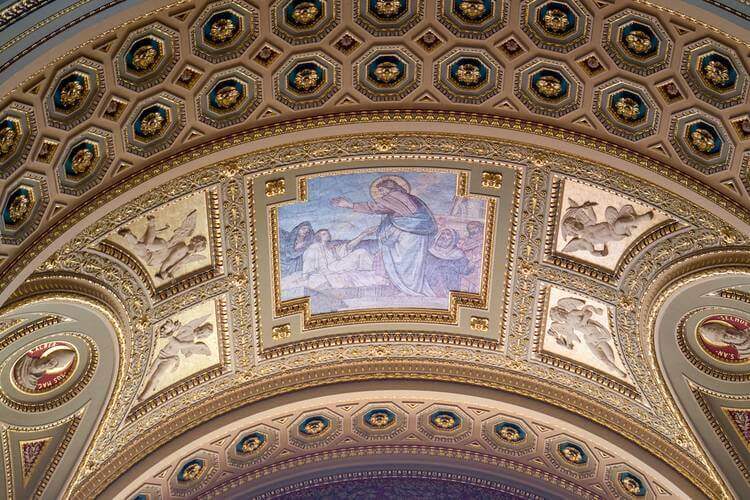
When you’re done with the interior, climb the stairs or take the elevator to the panorama terrace for a full view of Budapest. Entry is no longer free, as it was when this list was first written.
Quick Facts: St. Stephen’s Basilica
- Price: interior 2,600 HUF (about $7), panorama tower and treasury 5,000 HUF, combined 6,800 HUF (from December 1, 2025)
- Hours: interior Monday to Saturday 9:00 to 17:45, Sunday 13:00 to 17:45. Tower 9:00 to 19:00 daily. Weddings can close the church on weekends
- Dress code: shoulders covered, no very short shorts or skirts, no large bags
- Getting there: M1 to Bajcsy-Zsilinszky út, or M3 to Arany János utca
Verdict: Worth it, and the panorama terrace is the better value of Budapest’s paid viewpoints.
This pre-reserved entry covers the interior with options for the tower, rated 4.6 from over 15,000 reviews. Buying at the door works fine outside summer weekends.
6. Széchenyi Thermal Bath
Recommended by Natalie from Love and Road

One of the top things to do in Budapest is to visit a thermal bath, and if you can only visit one, my recommendation is Széchenyi. It was the first thermal bath on the Pest side of the city and is still one of the largest spa complexes in Europe.
The complex is huge, with three outdoor and 15 indoor pools, saunas and spa treatments. Even if you are not a big fan of thermal baths, the neo-Baroque building alone is worth seeing, and the outdoor pools will leave you speechless.
In summer the bath is packed with locals and tourists enjoying the pools and a cold Hungarian beer. In the cold months it is quieter, and locals still come to swim and play chess in the steaming water.
We went in winter, and despite the cold outside the pool it was one of the highlights of our 3 days in Budapest.
Quick Facts: Széchenyi Thermal Bath
- Price: daily ticket with locker 13,200 HUF Monday to Thursday (about $37), 14,800 HUF Friday and weekends, 15,800 HUF on holidays. Cabin 1,000 HUF extra. Entry before 9 am from 10,500 HUF (2026 official prices)
- Hours: Monday to Thursday 7:00 to 20:00, Friday 7:00 to 22:00, Saturday and Sunday 8:00 to 20:00
- Payment: card only on site. Budapest Card accepted
- Getting there: M1 to Széchenyi fürdő
- Time needed: 3 to 4 hours
Verdict: Worth it, but go early on a weekday or on a Friday evening. Summer weekend afternoons are crowded enough to spoil it.
This ticket with optional upgrades skips the cash desk and is the most booked Budapest product on GetYourGuide, rated 4.3 from more than 28,000 reviews. It costs a little more than the official site.
What about Gellért Thermal Bath?

Gellért Spa and Bath, in the Gellért Hotel on the Buda side, opened in 1918 and is famous for its Art Nouveau main hall, blue tiles, mosaics and carved columns. It closed on October 1, 2025 for a renovation that is expected to last until 2028.
Until it reopens, Széchenyi is the grand bath to visit, and the Veli Bej Bath below is the quieter, more atmospheric alternative.
7. Thermal Beer Spa

I am a big beer fan, as you might know, and trying local beers is one of the first things I do in a new destination. But did you know you can also take a bath in beer?
Thermal Beer Spa Budapest, inside the Széchenyi Bath complex, fills wooden tubs with thermal water and adds hops, malt and yeast. During the 45-minute session you can pour unlimited lager from taps between the tubs.
It is a novelty rather than a treatment, and the price is high for 45 minutes. Treat it as a fun hour for two, not a reason to skip the main pools.
Quick Facts: Thermal Beer Spa
- Price: about 19,500 HUF (about $54) per person, or about 29,500 HUF including Széchenyi entry. Check current prices, as the official site does not publish a dated list
- Hours: about 10:00 to 18:00
- Time needed: 45 minutes
- Booking: required, through the Thermal Beer Spa website
Verdict: Worth it only as a couple’s novelty. Solo travelers on a budget will get more from a full day in Széchenyi’s pools.
8. Veli Bej Bath
Recommended by Nina from Where in the World is Nina

While everyone else flocks to Széchenyi to swim with 1,000 others, I checked out some of the lesser-visited baths, and I’m very happy I did. Veli Bej sits inside a hospital complex on the Buda bank, which makes it a bit of an underground, literally, find.
The Ottoman bath dates from the 16th century, and its domed Turkish interior is beautiful. Dip into the cold pool, then the warm one, then the very hot one, relax and repeat.
Capacity is limited to about 80 people and there is no online booking, so arrive early. The bath also closes between noon and 3 pm.
Quick Facts: Veli Bej Bath
- Price: 5,700 to 7,200 HUF (about $16 to $20) for 3 hours. Overstaying is charged by the minute
- Hours: 6:00 to 12:00 Wednesday to Sunday, 15:00 to 21:00 daily
- Address: Árpád fejedelem útja 7, in the Brothers Hospitallers hospital complex
- Getting there: tram 4 or 6 to Margaret Bridge, or tram 19 or 41
Verdict: Worth it for anyone who has done Széchenyi or wants a quiet, historic bath. Families should skip it, since the space is small and calm.
9. Danube Cruise
Recommended by Allison from Sofia Adventures

The Danube separates Buda, where Buda Castle and Fisherman’s Bastion stand, from Pest. On a cruise you pass the Gellért Baths, Buda Castle, the Chain Bridge, the Central Market Hall and the Parliament, my personal favorite.
Many cruises include a drink and an audio guide in several languages. I recommend timing your cruise so the sun sets soon after you set out.
Most cruises end near the Parliament before returning to the dock, so you get golden hour light for most of the trip and the building lit up at the end.
Quick Facts: Danube Cruise
- Price: Legenda day cruise €20, evening cruise €25 per adult with one drink, children under 10 free (checked October 2026)
- Time needed: about 1 hour
- Departure: Legenda leaves from Dock 7 at Jane Haining rakpart, near Vigadó tér
Verdict: Worth it after dark. A daytime cruise covers the same route with none of the lights, so skip it unless the evening is fully booked.
This one-hour evening cruise with a drink is rated 4.5 from over 10,000 reviews and is the straightforward choice for the lights. Travelers who want a quieter boat should look for the small rooftop-seating cruises instead.
10. RiverRide Amphibious Bus
Recommended by Harsh from Wanderers Hub

While strolling on the bank of the Danube, we came across a bus floating on the water, and it took us less than a minute to sign up for the RiverRide tour. This tour shows the Hungarian capital from both the land and the water.
Take a window seat and get set for a 90-minute journey that starts on land and then drives dramatically into the Danube. The tour leaves from Széchenyi István tér near the Chain Bridge and passes several city sights before the splash.

Once in the river, the bus passes a lineup of riverside landmarks before climbing back onto the shore. It runs all year, three or four times a day depending on season, and it is best to book ahead as rides often fill up.
Quick Facts: RiverRide
- Price: 6,000 HUF adults, 5,000 HUF students and seniors, free under 6 (checked April 2026)
- Time needed: about 1.5 hours
- Departure: Széchenyi István tér 7 to 8, Pest end of the Chain Bridge
Verdict: Worth it with children. Adults traveling alone will see more of the river for less on an evening cruise.
11. Budapest at Night from Gellért Hill
Recommended by Bilyana from Owl Over the World
Budapest is one of the most beautiful capital cities in Europe and one of the best cities to visit in Hungary. If you ask me, it is also a very romantic city, even more romantic than Paris.
You can feel it by day, but Budapest at night is another experience entirely. When you visit, don’t miss a night walk or a spot where you can look out over the lit-up city.
My recommendation is Gellért Hill, which overlooks the Danube from the Buda side and has the Citadella fortress at its top. Much of the hill is parkland, and it is part of the Banks of the Danube UNESCO World Heritage Site.
Sitting there and watching Budapest at night is one of the best things you can do in the city. The view is wonderful during the day too.
Quick Facts: Gellért Hill
- Price: free
- Time needed: 1 to 2 hours including the climb
- Getting there: walk up from the Buda end of Elisabeth Bridge or Liberty Bridge, about 20 to 30 minutes on steps and paths
Verdict: Worth it, and free. Bring a headlamp or phone light for the descent, since some paths are dim.
12. Walking Tours of Buda and Pest
Recommended by Nisha and Vasu from Lemonicks

Almost without fail, the first thing we do in a new city is a walking tour of the old town to get the hang of the place. In Budapest, we found one tour was not enough, because the city spreads across both banks and some districts are far from the center.
We suggest three walks of about two hours each, which can be done in one long day if self-guided. The first is in Buda: start at Fisherman’s Bastion for views of Pest and the Parliament, then work down past Matthias Church, the Buda Castle Labyrinth, the Houdini Museum and the castle to the Zero Kilometer Stone by the river.
The second covers the old center of Pest, starting at St. Stephen’s Basilica and continuing through Liberty Square, past the US Embassy and the statue of Ronald Reagan, to the Parliament. It ends at the Shoes on the Danube Bank, a memorial to Jews shot on the riverbank in 1944 and 1945.
The third walk winds through the narrow streets of the old Jewish Quarter and its synagogues. Do it in the late afternoon so you can finish in one of the ruin bars, and add the House of Terror on nearby Andrássy út if you have time.
Quick Facts: Walking Tours
- Price: free with a self-guided route, or tip-based and paid tours from about €15 to €30
- Time needed: about 2 hours per walk
Verdict: Worth it on the first day, especially the Pest walk, which ties together the Basilica, the Parliament and the riverbank memorials.
13. Ruin Bars and Szimpla Kert
Recommended by Clemens from Travellers Archive

Budapest hides courtyards behind broken façades, and it has a feel somewhere between crumbling and very hip. The best place to feel that is a ruin bar, a bar built into an abandoned building in District VII, the old Jewish Quarter.
After World War II the district was full of empty buildings that needed new life, which made it the perfect place for this kind of underground bar. Szimpla Kert, the pioneer of them all, is the natural place to start.
Many bars look like ordinary apartment blocks from the street and rarely have a proper sign. Once inside, you’ll find mismatched furniture, alternative art and a crowd that fills every courtyard.
A good way to find the best bars and meet people is a Budapest bar crawl. Every ruin bar is different, but they all follow the same idea: if a place is empty, why not put a bar inside?
Quick Facts: Szimpla Kert
- Price: free entry. A half-liter beer costs about 2,200 to 2,500 HUF here, against 800 to 1,000 HUF in a neighborhood pub (September 2026)
- Hours: open until 4:00, with a farmers’ market on Sunday mornings from 9:00 to 14:00
- Address: Kazinczy utca 14
- Getting there: M2 to Astoria
Verdict: Szimpla Kert is worth one drink to see the original. Then move to the smaller bars nearby, where drinks cost less and the crowd is more local.
14. Central Market Hall
Recommended by Kate from Our Escape Clause

Budapest’s Central Market Hall, also called the Great Market Hall, is one of the best stops in the city for any food lover. The ground floor holds an impressive market of cheeses, meats, fruit, vegetables, wine, bread and spices, including enormous amounts of paprika.
If you plan to stock up on paprika, and you definitely should, stop at a few stalls and take time to find the Hungarian paprika that is right for you. Prices aren’t always the best, since the market is popular with tourists.
It is still an enjoyable place for grocery shopping if you’re staying in an apartment, and we picked up some beautiful produce there on our last visit. The upper floor is very different, with stalls serving traditional Hungarian food and stands selling lace, painted eggs and souvenirs.
Don’t leave without trying a few Hungarian specialties, including lángos, fried bread topped with sour cream and grated cheese. It sounds strange, but it is delicious and not to be missed.
Quick Facts: Central Market Hall
- Price: free entry
- Hours: Monday to Friday 6:00 to 18:00, Saturday 6:00 to 16:00. Sunday hours differ between sources, so check before going. Closed on public holidays
- Getting there: M4 to Fővám tér, or trams 2, 47, 48 and 49
Verdict: Worth it for the ground floor and the building. Skip the upstairs food stalls for a sit-down meal, as they are priced for tourists.
15. Evening Food Walk with Taste Hungary

Taste Hungary combines classic sightseeing with typical Hungarian food and drink. Your guide will answer all your questions about Hungarian cuisine, wine culture, life in Budapest and, of course, the bar scene.
When I joined, the evening walk included a stop at Szimpla Kert to try pálinka, the Hungarian fruit brandy. I know you always wanted to try testicles, right?
I did, and the sauce was the best part of the dish, though you can choose from a wide range of local dishes.

The tour I took, the Dinner Walk, no longer runs under that name. Its closest current equivalent is the Palace District Evening Culinary and Wine Walk.
Quick Facts: Taste Hungary Evening Walk
- Price: Palace District Evening Culinary and Wine Walk €129 per person (October 2026)
- Time needed: about 4 hours
- Booking: required, directly with Taste Hungary
Verdict: Worth it on the first or second night, because the guide’s restaurant and wine tips pay off for the rest of the trip.
16. Wine, Cheese and Charcuterie Tasting

Another tour I highly recommend if you are interested in Hungarian wine, food and history is the Wine, Cheese and Charcuterie Tasting with Taste Hungary. It takes place every afternoon at 3 pm at the Tasting Table wine shop and lasts about 2 hours.
Our guide began with an introduction to Hungarian history and to the country’s 22 wine regions. The best part was, of course, the tasting itself: one sparkling wine, one white, two reds and one dessert wine.
My favorite was a Rhapsody Bikavér from the Eger wine region. Did you know the name means Bull’s Blood?
Quick Facts: Wine, Cheese and Charcuterie Tasting
- Price: afternoon tasting €45, evening tasting at 6 pm €60 (October 2026)
- Time needed: 2 hours
- Address: Tasting Table, Bródy Sándor utca 22, open Monday to Saturday from noon
Verdict: Worth it, and the best-value introduction to Hungarian wine before a trip to Eger or Tokaj.
17. Dining with Locals
Recommended by Toccara and Sam from Forget Someday

One of the best ways to experience local culture in a new destination is to dine with locals. We did this in Budapest, and it was so enriching that we now look for similar opportunities wherever we travel.
You see how local residents live, eat truly home-cooked food and have fascinating conversations about local traditions. We met Peter and his family, who were all welcoming and delightful company, and since Peter is a wine enthusiast with a passion for cooking, we had no doubt the meal would be good.
The meal started with homemade pálinka, then two kinds of duck liver pâté with fresh bread from the local market. Next came a peach cream soup with goat cheese, mint and chili flakes, an intriguing combination.
The soup was followed by cucumber salad and the main course, chicken paprikash over noodles. With it we drank Indian Summer, a red from the Eger region, and a refreshing white Furmint from the Somló region.
We finished with a traditional dessert, Somlói galuska, sponge dumplings with chocolate sauce, rum and whipped cream, and a sweet Tokaji Aszú, known as the wine of kings and the king of wines. We ate on the family’s terrace overlooking the Danube, and four hours of food, conversation and views made it the meal we still talk about.
We booked through BonAppeTour. Its Budapest listings have since changed, and in October 2026 it offered a Hungarian cooking class in a local home rather than a dinner.
Quick Facts: Dining with Locals
- Price: BonAppeTour’s Budapest cooking class from about $91 per person (October 2026)
- Time needed: 3 to 4 hours
- Booking: required, several days ahead
Verdict: Worth it for travelers who want a conversation as much as a meal. Check what each host currently offers, since home dining listings change often.
18. Gelarto Rosa
Recommended by Charlotte from The Millennial Runaway

Beside St. Stephen’s Basilica you’ll find the artisan ice cream shop Gelarto Rosa. Its gelato is made on site with traditional Italian techniques and organic ingredients.
Each portion is shaped into a rose with a special spatula, which also keeps the texture creamy. Vanilla, chocolate, lavender white chocolate, mango, raspberry, basil, lemon and pistachio were on the menu when I visited, with walnut, wasabi hazelnut, pumpkin and brown bread whiskey appearing seasonally.
You can mix flavors as you like, and there are options for vegan, lactose-intolerant and diabetic diets. A second, larger shop, Gelarto Rosa Grande, now operates nearby.
Quick Facts: Gelarto Rosa
- Price: check current per-rose prices
- Hours: Szent István tér 3, daily 11:00 to 22:00. Gelarto Rosa Grande, Hercegprímás utca 9, daily 10:00 to 21:00 (October 2026)
Verdict: Worth it as a stop after the Basilica. Expect a queue on summer evenings, and try the Grande shop if the line is long.
19. Comme Chez Soi

Comme Chez Soi is a small Italian and French restaurant in central Pest, long popular with visitors for generous portions and warm service. The menu runs from starters, salads, pasta and soups to seafood, meat dishes and pizza, and the breaded veal fillet came highly recommended.
From French cognac to prosecco to alcohol-free beer, you may well leave a little merrier than you arrived. Just when you think you can’t eat more, out comes the limoncello, and if you’re brave, a shot of pálinka.
If you assume the moderate prices mean small portions, you’d be quite mistaken. On my visit the portions were enormous, with complimentary drinks and appetizers and a box of chocolates on the way out.
Quick Facts: Comme Chez Soi
- Price: mid-range
- Hours: 12:00 to 23:00. Sources disagree on Sunday opening, so call ahead on +36 1 318 3943
- Address: Aranykéz utca 2, District V
- Booking: recommended, as the dining room is small
Verdict: Worth it for a generous, convivial dinner. Travelers looking for modern Hungarian cooking should book one of the city’s Michelin-starred restaurants instead.
20. The Budapest Makery
Recommended by Michael from The Round the World Guys

There are hundreds of places to eat in Budapest, but none quite like the Budapest Makery. In the Jewish Quarter, it bills itself as the world’s first do-it-yourself restaurant.
You order from the menu, and staff bring the ingredients, the cookware and a tablet with video instructions, and you cook everything yourself. I made a pancake soup to start and goat cheese balls with beetroot as a main, and someone was always on hand with help.
I went alone and had fun, but the Makery is made for couples and groups. For a couple it is a good test of a relationship, and for a group it is simply a great laugh.
Much of the fun is in the mistakes, so bring an appetite and a sense of humor, as portions are generous. It is one of the more unusual things to do in Budapest.
Quick Facts: The Budapest Makery
- Price: mains 6,200 to 10,500 HUF, starters and desserts 6,000 to 7,000 HUF (October 2026)
- Hours: daily 11:00 to 23:00, last table booking 21:00
- Address: Dob utca 38, District VII
- Booking: by email or phone, recommended for evenings
Verdict: Worth it for groups and couples who enjoy cooking. Skip it if you just want a good dinner without the work.
21. Hungarian State Opera House
Recommended by Noel from Travel Photo Discovery

If you love music, a night at the Hungarian State Opera House on Andrássy út is a must. The neo-Renaissance building is beautiful inside and out, and at night the auditorium and grand staircase sparkle.
It reopened in March 2022 after a full restoration. Opera and ballet tickets cost a fraction of what Vienna, London or New York charge, so a performance is a modest splurge.
If no performance fits your dates, the daily guided tour shows the interiors and ends with a short live performance.
Quick Facts: Hungarian State Opera House
- Price: guided tour in English 12,000 HUF (about $33), in Hungarian 6,400 HUF. Performance prices vary (October 2026)
- Tour times: daily at 13:30, 15:00 and 16:30, about 1 hour. Tickets go on sale a week ahead
- Getting there: M1 to Opera
Verdict: A performance is worth it. The tour is worth it only if you cannot attend one, since 12,000 HUF often buys a good seat.
This skip-the-line tour of the Opera House interiors is rated 4.5 from over 2,000 reviews and suits travelers whose dates do not match the performance calendar.
22. Art Nouveau Architecture
Recommended by Kami from Kami and the Rest of the World

Among all the spectacular buildings in Budapest, one style stands out: Art Nouveau. When the city center, especially on the Pest side, was developing rapidly at the turn of the 19th and 20th centuries, Art Nouveau was at the peak of its popularity.
That is why so many of these buildings survive, and why they are among the best examples of the style anywhere. Budapest’s version drew on Hungarian folk design, Transylvanian traditions and even Far Eastern motifs.
The best known are Gresham Palace, completed in 1906 opposite the Chain Bridge and now the Four Seasons hotel, and the Gellért Baths, built from 1912 to 1918 beside Liberty Bridge. For me, the most impressive are Ödön Lechner’s Museum of Applied Arts and Postal Savings Bank.
The Museum of Applied Arts has been closed for restoration since 2017, with no reopening date as of mid-2026, so admire it from the street. The House of Hungarian Art Nouveau at Honvéd utca 3 has a small museum and café in the style, but check current opening hours before going.
Quick Facts: Art Nouveau Budapest
- Price: free to view from outside. House of Hungarian Art Nouveau listed at 2,000 HUF, check current status
- Time needed: half a day on foot
- Where: Gresham Palace at Széchenyi István tér, the Postal Savings Bank on Hold utca, the Museum of Applied Arts on Üllői út
Verdict: Worth it for design lovers, and easy to combine with the Pest walking tour. Casual visitors will see enough on the way between other sights.
23. Szabó Ervin Library
Recommended by Marie from Our City Travels

Budapest has been called the Heart of Europe and the Paris of the East, and it mixes old-world charm with a modern feel. One of my favorite places is the central branch of the Szabó Ervin Library, the city’s public library, housed in the neo-Baroque Wenckheim Palace, built in 1889.
The library holds Budapest’s largest public book collection and spreads across a maze of reading rooms. The central library rooms in the old palace are the ones worth finding.
Warmly lit and paneled in dark wood, the two rooms that were once the dining room and smoking room are so photogenic that you’ll be inspired to read, and probably to study again. The spiral staircase up to the mezzanine, the chandeliers and the leather seats complete the old European atmosphere.
There is also a cafeteria where you can chat with students, a small second-hand book stall and a lovely courtyard. You never know how impressive a library can be until you see this one.
Quick Facts: Szabó Ervin Library
- Price: daily reader card 1,700 HUF (October 2026)
- Hours: Monday to Friday 10:00 to 20:00, Saturday 10:00 to 16:00, closed Sundays
- Address: Reviczky utca 1, District VIII
- Getting there: M3 or M4 to Kálvin tér
Verdict: Worth it for an hour. Keep voices and cameras low, as it is a working library full of students.
24. Margaret Island
Recommended by Alex from Swedish Nomad

Margaret Island, Margitsziget in Hungarian, is the green island in the middle of the Danube in central Budapest. It is a popular recreation area of gardens and lawns, with a running track around its edge.
It also has medieval sites, including the ruins of a Dominican convent and a Franciscan church from the 13th century. There is a popular bathhouse and an outdoor pool complex for swimming in summer.
The island’s Music Fountain, with water choreographed to music, ran its last full season on September 30, 2026 before a major renovation. Note that the Sziget Festival is not held here but on Óbuda Island, further north; the 2026 edition ran August 11 to 15.
To reach Margaret Island, walk across Margaret Bridge or Árpád Bridge, or take tram 4 or 6 to the bridge stop.
Quick Facts: Margaret Island
- Price: free
- Time needed: 2 to 3 hours
- Getting there: tram 4 or 6 to Margitsziget, or bus 26 across the island
Verdict: Worth it on a warm day for a run, a picnic or a break from sightseeing. With the fountain under renovation, there is little reason to come in winter.
25. Memento Park
Recommended by Mark from Wyld Family Travel, and Elaine and Dave from Show Them the Globe

Memento Park is an open-air museum on the outskirts of Budapest where, after the fall of communism in Hungary, the regime’s giant statues were put on display. The propaganda statues once stood in prominent places across Hungary to remind people of the greatness of the Soviet system.
Rather than destroy the statues, as many countries did, Hungary gathered them in one place. The park holds figures of Lenin, of Marx and Engels, the German founders of communism, and of Hungarian communist leaders such as Béla Kun, Endre Ságvári and Árpád Szakasits.

From the replica of Stalin’s boots at the entrance to the enormous Republic of Councils Monument, it is striking that some statues date from as late as the 1980s. More than 40 are on display, and the park opened on June 29, 1993, the second anniversary of the withdrawal of Soviet troops.
Pick up a guidebook at the entrance, as there is very little information inside the park. Don’t miss the training films on how to plant bugs and search houses.
Quick Facts: Memento Park
- Price: 3,000 HUF adults (about $8), 1,800 HUF students. Free with the Budapest Card (October 2026)
- Hours: daily 10:00 to 17:00
- Getting there: M4 to Kelenföld, then bus 101B or 101E, about 9 minutes, or bus 150. There is no scheduled direct bus from the center
- Time needed: about 1.5 hours plus travel
Verdict: Worth it for anyone interested in the Cold War. Travelers with only two days should skip it, as the round trip takes most of a morning.
26. Normafa and the Buda Hills
Recommended by Gábor from Surfing the Planet

Budapest is one of the principal cultural destinations in Europe, and it also has an enviable landscape. The Danube divides flat Pest from hilly Buda, and the views from the Buda Hills are superb.
The views from Buda Castle and Gellért Hill are well known, but there are other great excursions without leaving the city limits. One of the less touristy is Normafa, mostly frequented by locals, with hiking trails, picnic spots, joggers and dog walkers.
The walk from Normafa to János Hill, the highest point in Budapest, is a lovely excursion for nature lovers. The Elisabeth Lookout tower at the summit has been closed since February 2026 for rebuilding, with no reopening date, so the views from the tower itself are off limits for now.
Normafa is easy to reach by public transport. Take bus 21 or 21A from Széll Kálmán tér to the final stop, about 19 minutes, and the trails start close to the bus stop.
Quick Facts: Normafa
- Price: a public transport ticket. Children’s Railway 1,000 HUF adults. Zugliget Chairlift 3,000 HUF one way (closed October 5 to 16, 2026)
- Time needed: half a day
- Getting there: bus 21 or 21A from Széll Kálmán tér (M2)
Verdict: Worth it for hikers and anyone staying four days or more. With the lookout tower closed, short-stay visitors get better views for less effort on Gellért Hill.
27. Day Trip to Eger
Recommended by Christine from Christine Abroad

If you want a day away from the big-city pace of Budapest, I highly recommend a day trip to Eger. About two hours from central Budapest, Eger is a beautiful, cozy town known for wine tasting, a medieval castle, Baroque churches and a lively central square.
Locals and visitors sit in the afternoons over coffee or a glass of local wine. The Valley of the Beautiful Women, with more than 150 wine cellars, is a 10- to 15-minute walk from the center.
Beyond the sights, it is simply nice to stroll the old town, browse local shops, stop for ice cream and enjoy the calm.
Trains run hourly from Budapest-Keleti station and take about 1 hour 52 minutes, and tickets can be bought at the station.
Quick Facts: Eger
- Price: train about $7 to $9 each way (October 2026)
- Time needed: a full day
- Getting there: MÁV train from Budapest-Keleti, about 1 hour 52 minutes
Verdict: Worth it for wine lovers with four days or more in Budapest. With less time, a tasting in the city covers the same wines without the train.
More Budapest tours, tickets and day trips are listed on GetYourGuide.
Where to Stay in Budapest
Most first-time visitors are best based in District V on the Pest side, within walking distance of the Basilica, the Parliament and the river. Buda’s Castle District is quieter and more atmospheric but needs a bus or a climb every evening.
Hilton Budapest
Recommended by Bertaut and Alexis from World Travel Adventurers

Hilton Budapest sits in the historic Castle District on the Buda side, right next to Fisherman’s Bastion and Matthias Church. It is within walking distance of the main Castle Hill sights and a few minutes from a bus stop.
The hotel is built around the remains of a 13th-century Dominican church and has worked the ruins into its design. Many rooms look out over the Danube and the Parliament.
We especially loved the Executive Lounge, with breakfast, snacks and drinks through the day and an evening happy hour with appetizers, wine, beer and cocktails. We enjoyed pálinka there every night.
Hilton Diamond members have lounge access, or guests can book an Executive Room, which we recommend if you don’t have elite status. There is also a restaurant facing Fisherman’s Bastion, a gym, a sauna and a spa.
Other Budapest hotels by budget
- Four Seasons Hotel Gresham Palace: the 1906 Art Nouveau landmark at the Pest end of the Chain Bridge, for travelers who want the classic grand hotel. Check rates
- Matild Palace, a Luxury Collection Hotel: a restored 1902 Belle Époque palace near Elisabeth Bridge with a Wolfgang Puck restaurant and a rooftop bar, suited to couples. Check rates
- Aria Hotel Budapest: a music-themed five-star near the Basilica with a rooftop bar and spa, for a central base in District V. Check rates
- Gerlóczy Boutique Hotel: a small mid-range hotel above a well-known café in the inner city, for good value close to everything. Check rates
For what separates a genuine boutique hotel from a branded one, see what makes a hotel truly boutique, and browse Universal Traveller’s luxury stay reviews. Universal Traveller has not yet published a first-hand Budapest hotel review.
Getting to and Around Budapest
Budapest Liszt Ferenc International Airport (BUD) is about 16 kilometers southeast of the center. The 100E airport bus runs 24 hours a day, every 6 to 10 minutes in daytime, and reaches Deák Ferenc tér in about 40 minutes for 2,500 HUF.
Főtaxi is the airport’s official taxi operator, and a zone fare to the center costs about 9,000 to 11,000 HUF (2026). City taxi rates rose on August 1, 2026.
Inside the city, the metro, trams and buses run by BKK cover everything a visitor needs. Tram 2 along the Pest riverbank is a sightseeing route in itself.
| Ticket | Price (2026) |
|---|---|
| Single ticket | 500 HUF (700 HUF bought on board) |
| 24-hour pass | 2,750 HUF |
| 72-hour pass | 5,750 HUF |
| 100E airport bus | 2,500 HUF |
| Budapest Card, 72 hours | 29,990 HUF |
Since April 2026, contactless bank cards and phones can be tapped to buy and validate a single ticket on all four metro lines and the 100E bus. Hungary is in the Schengen Area, and the EU Entry/Exit System has recorded non-EU arrivals since April 2026.
ETIAS authorization has been postponed to 2027.
Best Time to Visit Budapest
The best time to visit Budapest is April to June and September to October, when highs run from 17 to 27°C and the crowds are smaller than in July and August. Summer is hot, and late May and June bring the most rain.
Winter is cold, with highs around 5°C, but it is the best season for the outdoor thermal pools. The Christmas markets at Vörösmarty tér and St. Stephen’s Basilica open on November 13, 2026 and push hotel prices up through December.
| Month | Avg high (°C) | Avg low (°C) | Rain (mm) | Crowds |
|---|---|---|---|---|
| Jan | 4.7 | -1.2 | 33 | Low |
| Feb | 7.1 | 0.1 | 30 | Low |
| Mar | 12.3 | 3.9 | 31 | Moderate |
| Apr | 18.8 | 9.1 | 33 | High |
| May | 23.1 | 12.8 | 57 | High |
| Jun | 26.8 | 16.3 | 60 | High |
| Jul | 28.8 | 18.0 | 54 | Very high |
| Aug | 28.9 | 17.7 | 54 | Very high |
| Sep | 23.1 | 13.3 | 46 | High |
| Oct | 17.2 | 8.7 | 44 | Moderate |
| Nov | 10.6 | 4.3 | 46 | Moderate |
| Dec | 5.1 | -0.2 | 38 | Very high |
Climate data: Budapest station 12840, 1991 to 2020 averages. Crowd levels are Universal Traveller’s assessment.
What a Trip to Budapest Costs
Budapest is still cheaper than Vienna or Prague for food and drink, but entry prices for the major sights have risen steeply. The figures below are per person per day, sharing a double room, in October 2026.
| Budget | Mid-range | Luxury | |
|---|---|---|---|
| Accommodation | $20 to $30 | $30 to $60 | $150 to $400+ |
| Food and drink | $20 to $30 | $40 to $70 | $120 to $250 |
| Activities | $15 to $25 | $40 to $60 | $80 to $150 |
| Transport | $8 (24-hour pass) | $8 to $15 | $30 to $60 (taxis) |
| Daily total | About $65 to $95 | About $120 to $205 | About $380 to $860 |
Based on hotel ranges of $40 to $60 a night budget, $60 to $120 mid-range and $300 and up for five-star palaces, a daily set lunch of 2,000 to 3,000 HUF, mid-range dinners of 3,650 to 7,300 HUF and a tasting menu of 60,000 to 90,000 HUF. Prices change, so treat these as ranges.
Suggested 3-Day Budapest Itinerary
- Day 1, Pest: St. Stephen’s Basilica and its panorama terrace, the Pest walking route to the Parliament and the Shoes on the Danube Bank, a Parliament tour in the afternoon, and dinner and ruin bars in the Jewish Quarter
- Day 2, Buda: Fisherman’s Bastion at sunrise while the terraces are free, Matthias Church and Buda Castle, lunch, the Chain Bridge on foot, and a Danube cruise after dark
- Day 3, baths and food: Széchenyi Thermal Bath from opening, Andrássy út and the Opera House, the Central Market Hall, and a wine tasting or evening food walk
With a fourth day, add Memento Park and Gellért Hill at night. With a fifth, take the train to Eger.
More Universal Traveller Guides
- The best places to visit in Europe
- Unique things to do in Berlin
- Things to do in Istanbul
- Things to do in Amsterdam
- Day trips from Paris
- Day trips from Cologne
- Mala Vila, a forest retreat in Croatia
- Vuglec Breg, a vineyard retreat in Croatia
- All Europe guides
Further reading: the best thermal baths in Budapest by Becky the Traveller.
Frequently Asked Questions About Things to Do in Budapest
How many days do you need in Budapest?
Three days is enough for Budapest’s main sights: one day for Pest and the Parliament, one for Castle Hill and a Danube cruise, and one for a thermal bath and the food scene. Four to five days allows Memento Park, the Buda Hills or a day trip to Eger.
Is Gellért Thermal Bath open?
No. Gellért Thermal Bath closed on October 1, 2025 for a renovation expected to last until 2028. Széchenyi Thermal Bath in City Park is the main alternative for a grand bath, and Veli Bej Bath on the Buda bank is a quieter, historic option.
How much does Széchenyi Thermal Bath cost?
A daily ticket with a locker at Széchenyi Thermal Bath costs 13,200 HUF Monday to Thursday and 14,800 HUF on Fridays and weekends in 2026, about $37 to $41. A cabin costs 1,000 HUF extra, and entry before 9 am is cheaper. Tickets are paid by card only.
Is St. Stephen’s Basilica free to enter?
No. Since December 1, 2025, entry to St. Stephen’s Basilica costs 2,600 HUF, the panorama tower and treasury cost 5,000 HUF, and a combined ticket costs 6,800 HUF. Shoulders must be covered, and weddings can restrict visits on weekends.
Is the Budapest Card worth it?
The Budapest Card is worth it for travelers visiting two or more paid museums a day. It costs 17,990 HUF for 24 hours and 29,990 HUF for 72 hours, and includes public transport, a Danube cruise and free entry to over 30 museums. A 72-hour transport pass alone costs 5,750 HUF.
Where is the best area to stay in Budapest?
District V in central Pest is the best area for a first visit, within walking distance of the Basilica, the Parliament and the Danube. District VII suits nightlife, while Buda’s Castle District is quieter and more scenic but requires a bus or climb back each evening.
Is Budapest walkable?
Central Budapest is very walkable. District V, the Jewish Quarter and the riverbank are flat and compact, and the Chain Bridge links Pest to Castle Hill in about 15 minutes on foot. Buda is hilly, so bus 16 or the funicular helps for Castle Hill, and the metro covers Széchenyi.
Do you need to book Budapest attractions in advance?
Book the Hungarian Parliament tour, the Opera House tour, the Thermal Beer Spa and cooking or food tours in advance, especially from May to September. Széchenyi, the Basilica, Fisherman’s Bastion and the Central Market Hall can be visited without booking, though queues build from late morning.
What is the best time to visit Budapest?
April to June and September to October are the best months to visit Budapest, with highs of 17 to 27°C and fewer crowds than July and August. December brings Christmas markets and higher prices, while January and February are cold but ideal for the outdoor thermal pools.
Is Budapest safe for tourists?
Budapest is generally safe for tourists. The main risks are pickpocketing on crowded trams, metros and in the Jewish Quarter at night, and overcharging by unofficial taxis. Use Főtaxi at the airport or a ride app, and check bar prices before ordering in tourist areas.


- About the Author
- More info
Pauline has a bachelor’s degree in Tourism and is a professional content writer. She specializes in writing about travel and food. Pauline spent most of her career life in Dubai and is a Travel Expert for the United States and Costa Rica.






Interesting post! Thanks for sharing!